



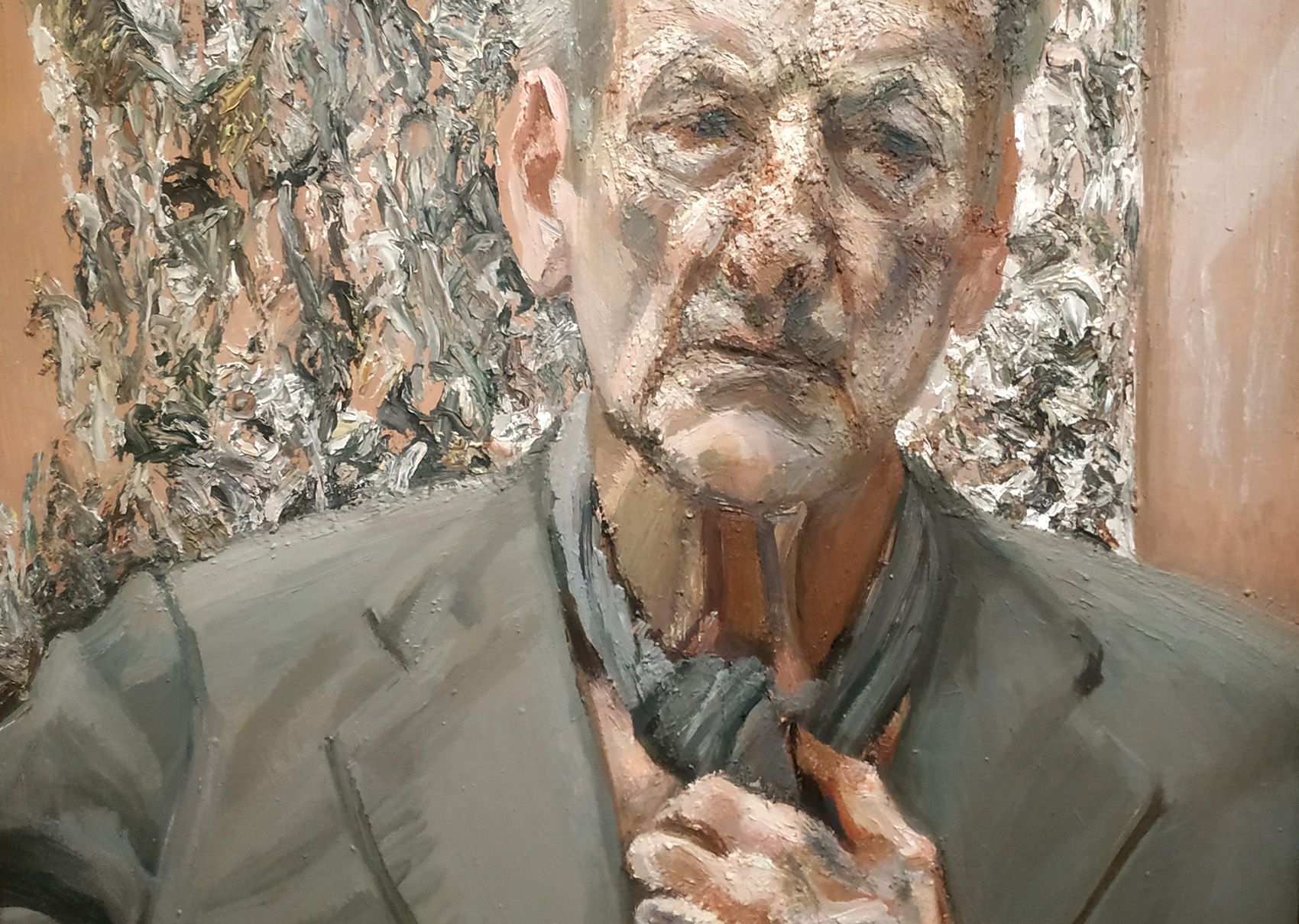
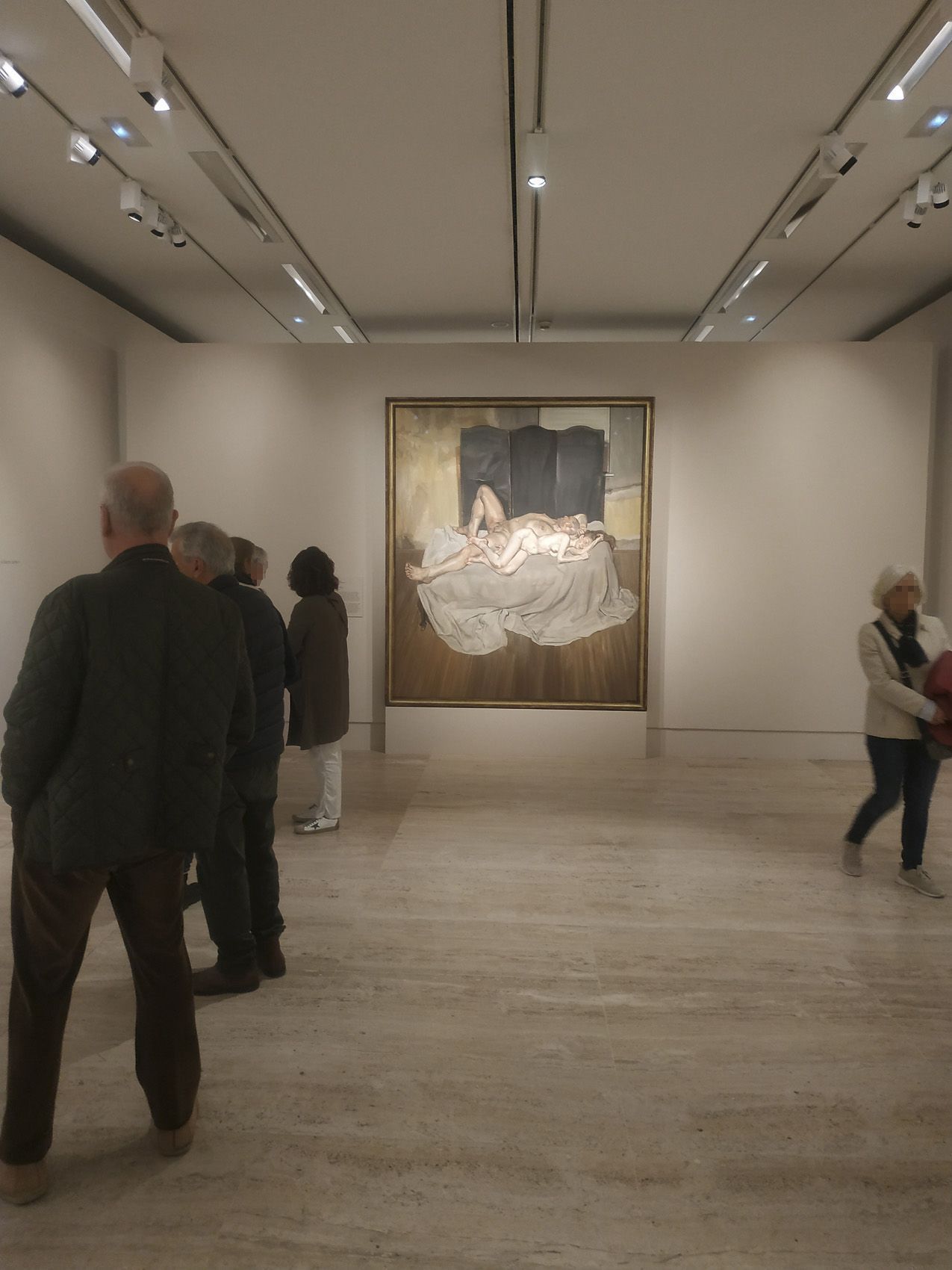
Last March 14, 2023, taking advantage of a trip to Madrid, I visited the Thyssen Museum to see the Lucian Freud exhibition.
First of all, I have to say that I went to the exhibition with the idea of documenting it, that is, to take a lot of pictures, something I don’t like to do or suffer for others when I go to exhibitions. There is nothing worse than people who visit the exhibitions and take pictures without looking at the works. Having said that, I confess that this time I became a bit of a fly in the ointment.
This Freud exhibition in Madrid is the second venue as previously the National Gallery in London hosted the exhibition, essentially the same holdings with a couple of exceptions.
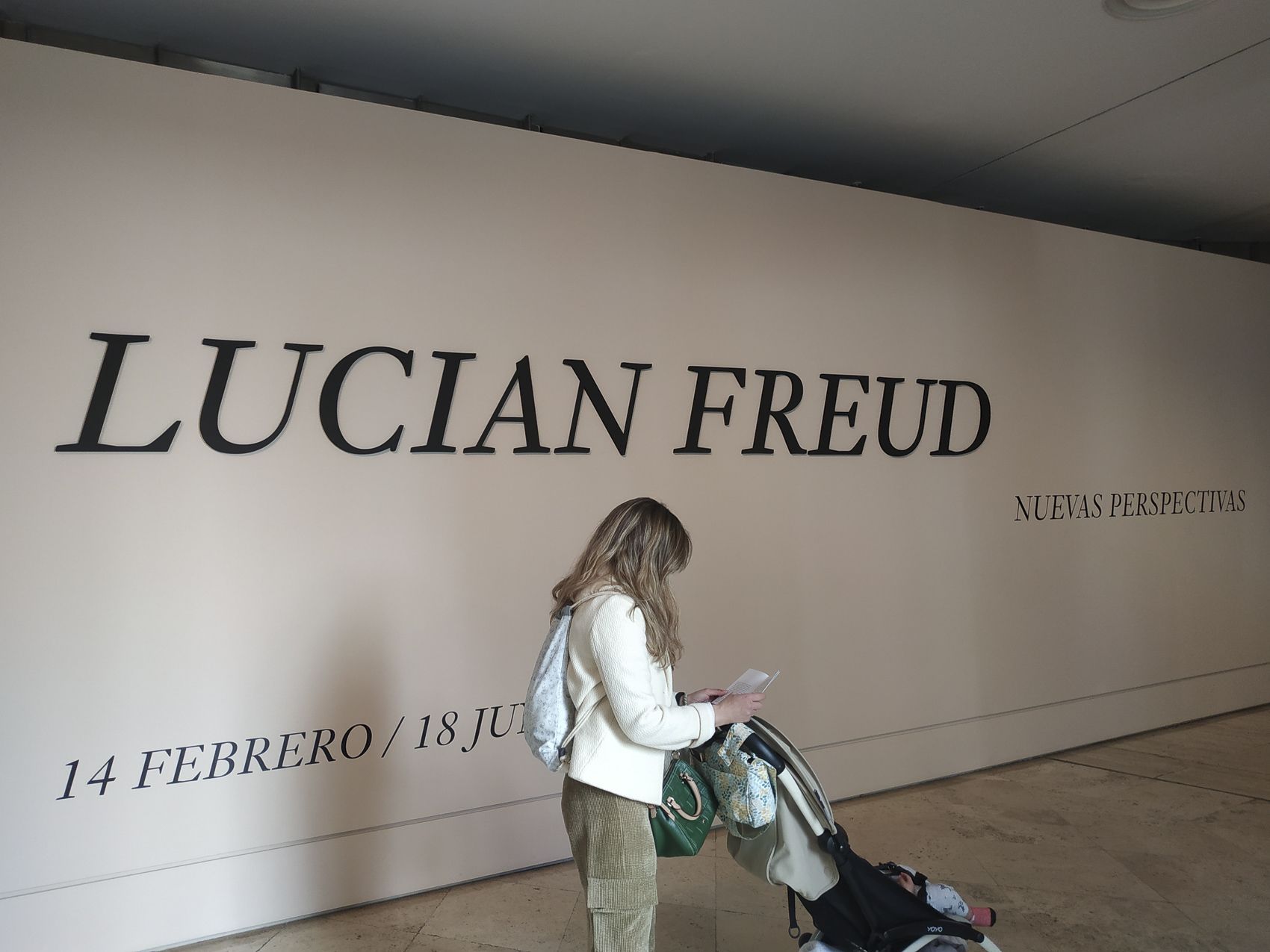
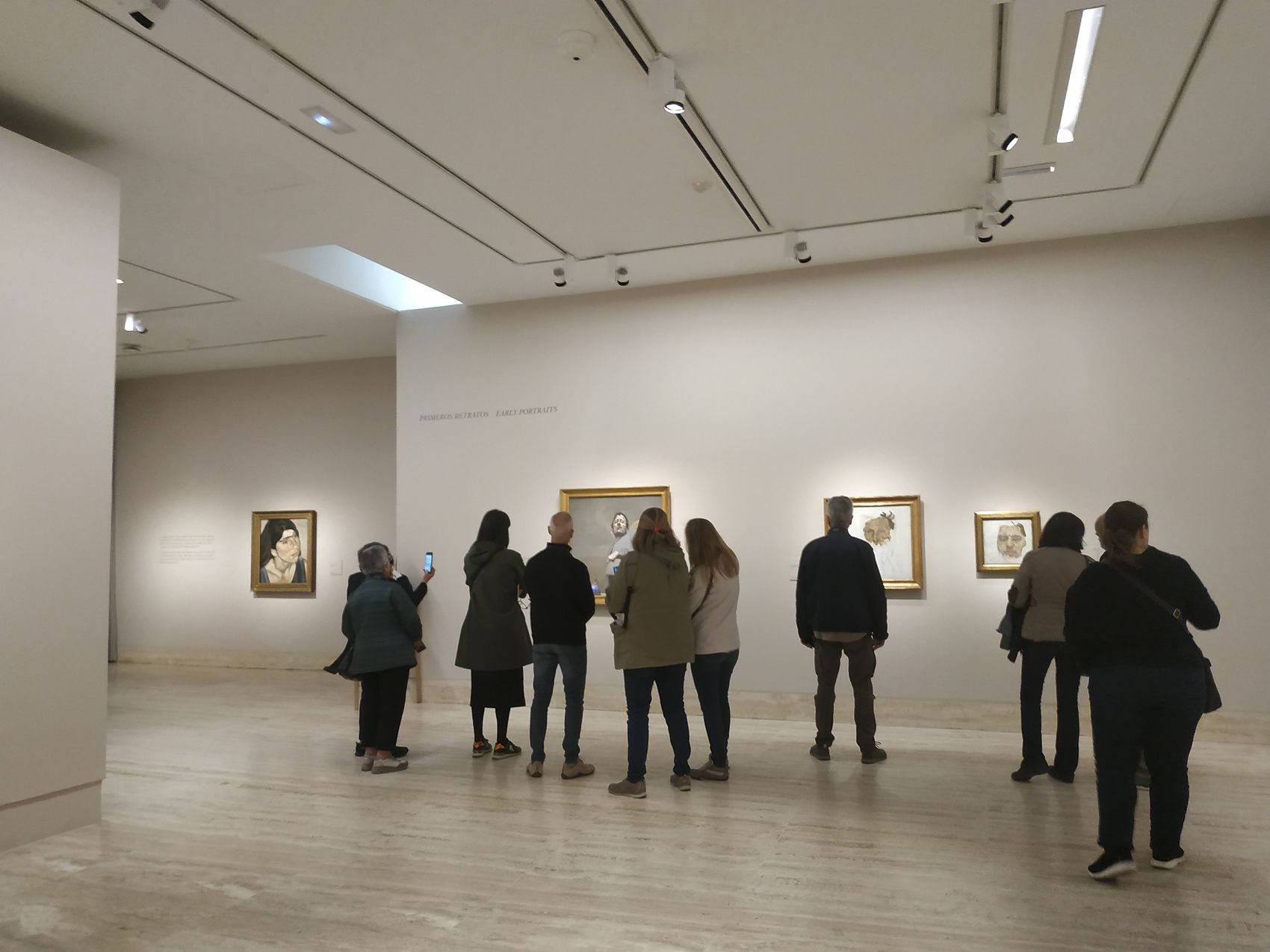
The exhibition is divided into 6 sections that, more or less chronologically, review the painter’s evolution and subject matter:
Becoming Freud
Dedicated to his early works. Freud takes the side of figurative art and adopts a position of resistance in the midst of the dominant abstract currents. His technique is meticulous and light, with a slow process and thin layers.
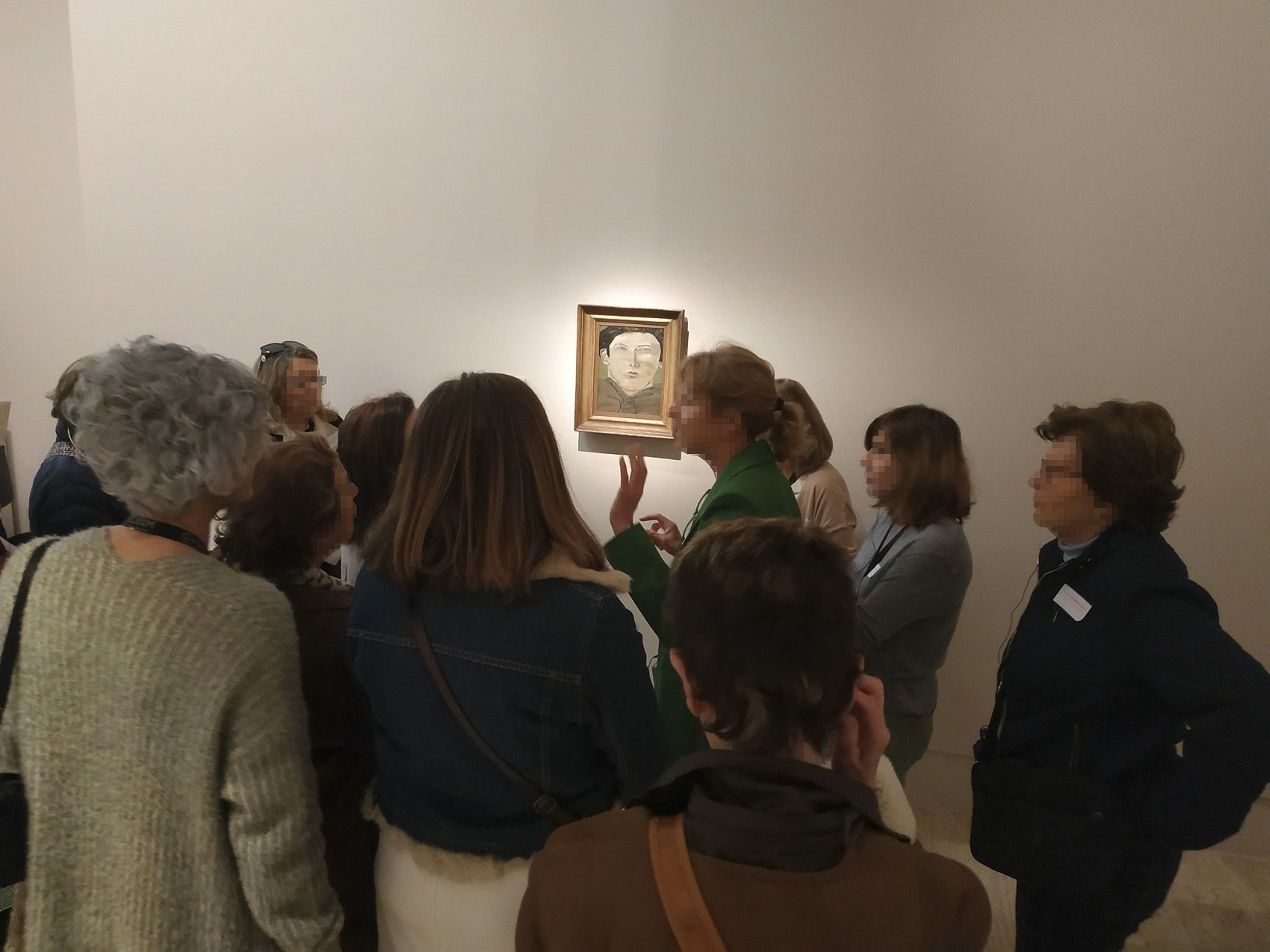
Oil on canvas
30.5 x 22.6 cm
1940
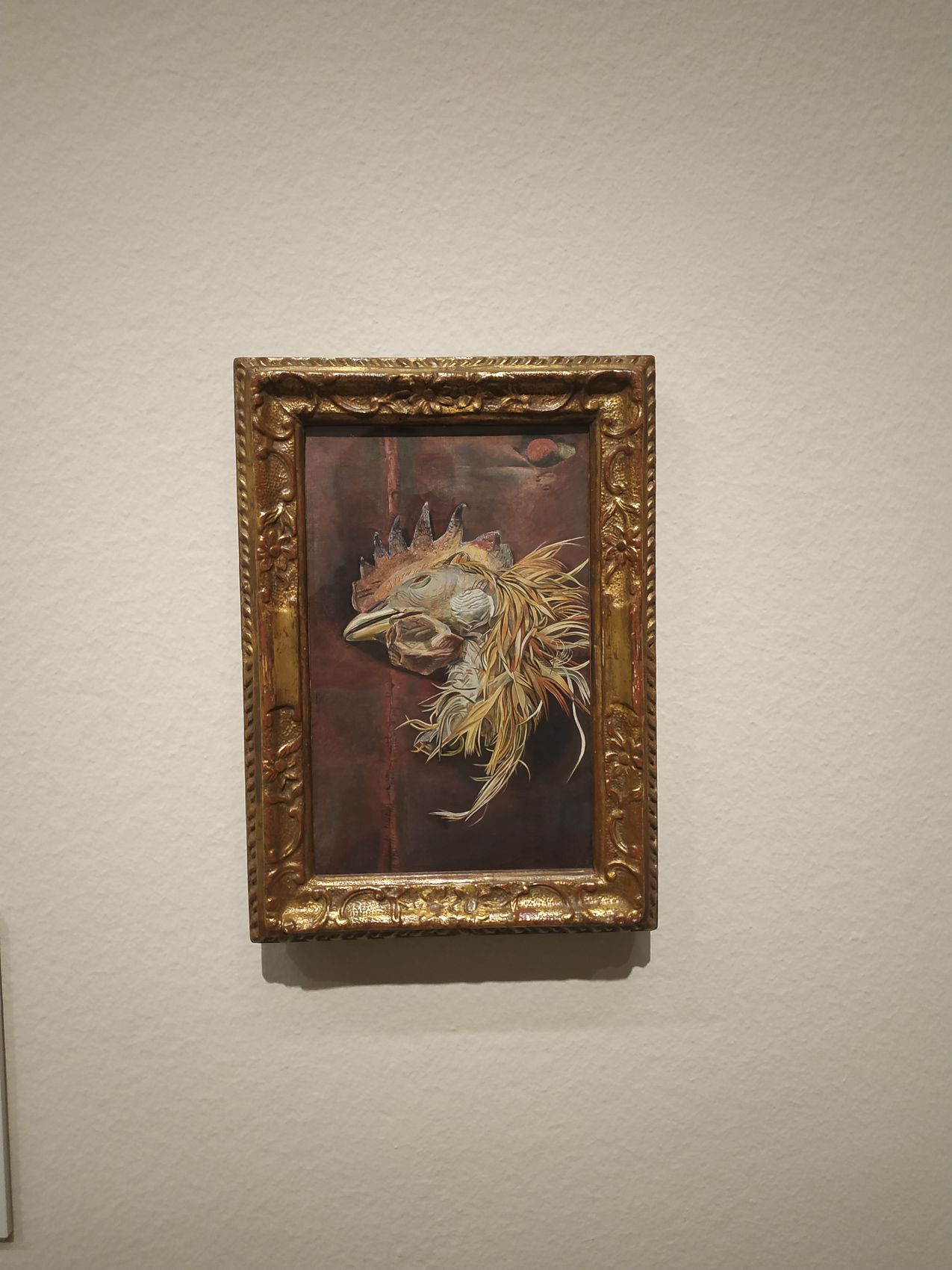
Oil on canvas
20.3 x 12.7 cm
1951
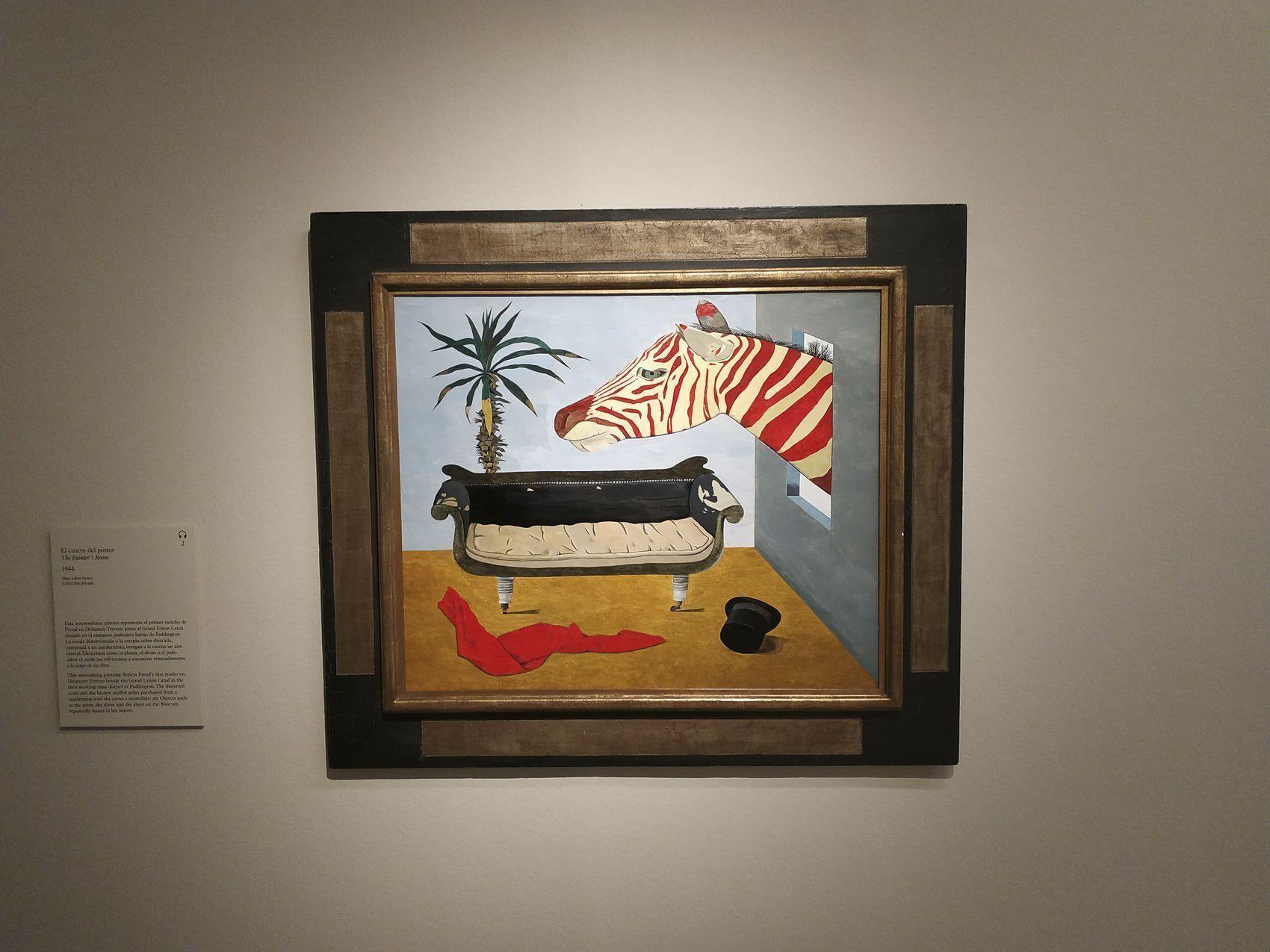
Oil on canvas
62.2 x 76.2 cm
1944
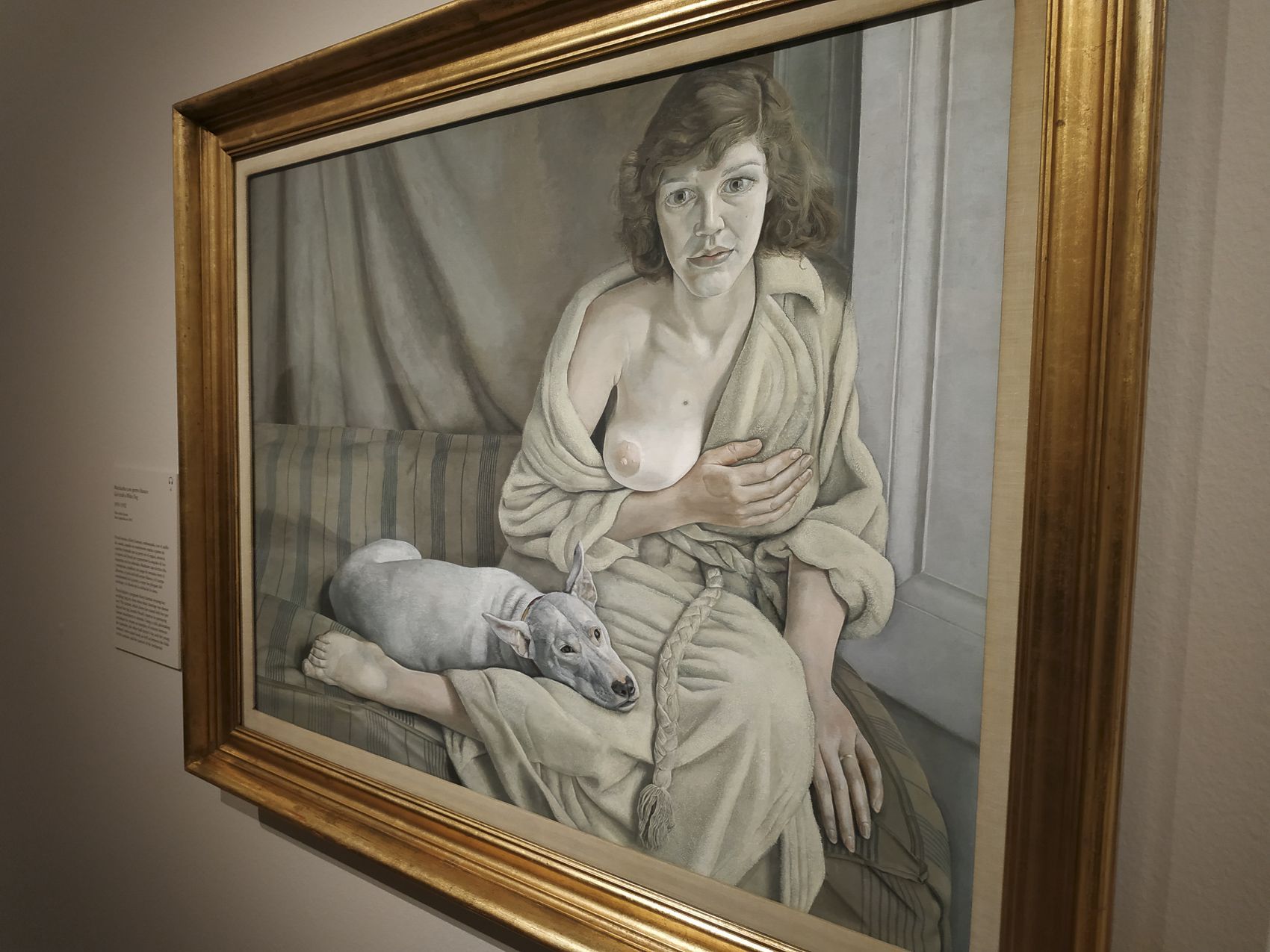
Oil on canvas
76.2 x 101.6 cm
1951-1952
First portraits
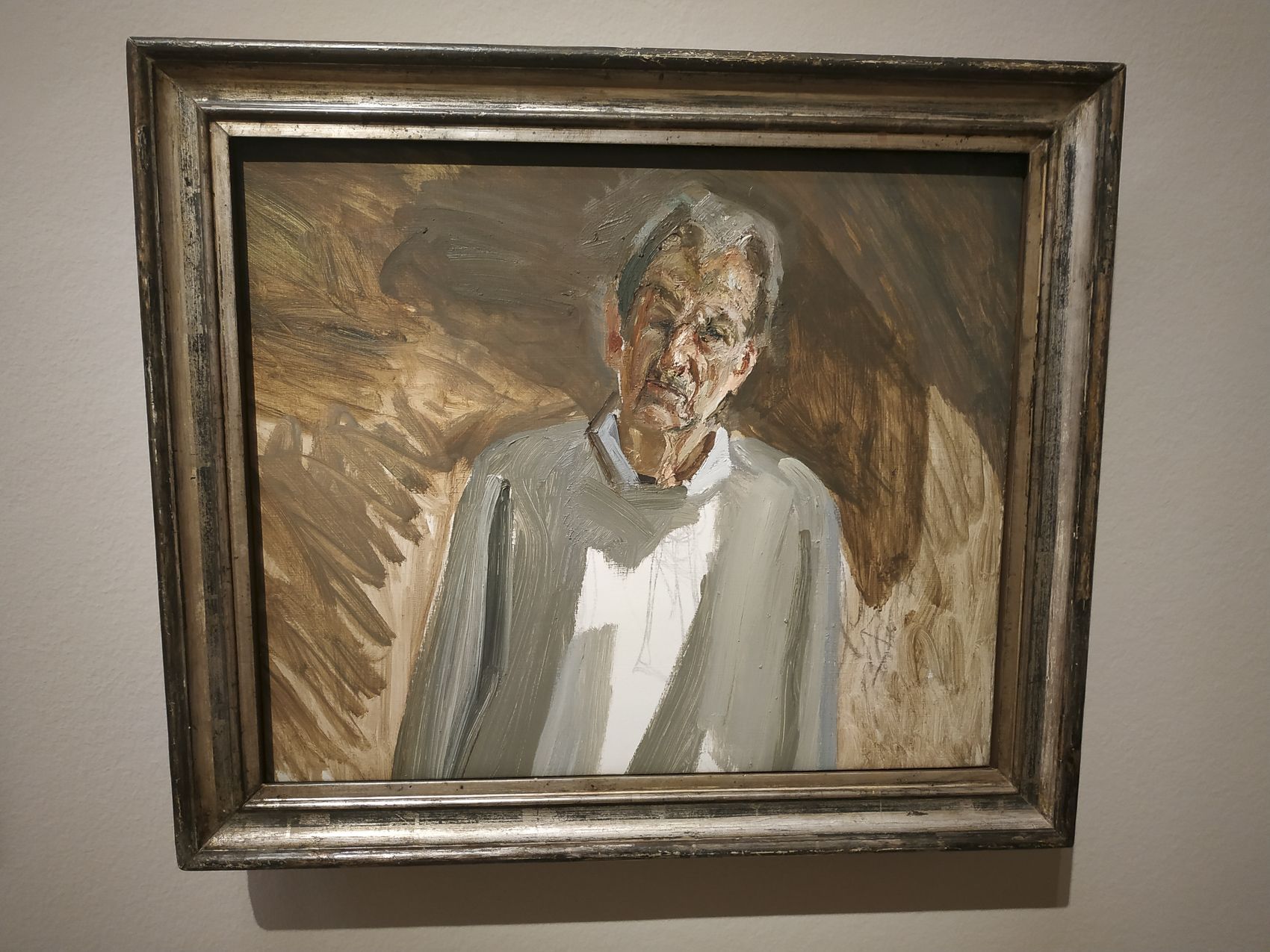
In which his desire to capture the essence of his models is already evident. The portraits of his second wife Girl in bed (1953), Girl with green dress (1954) and Hotel room ( 1954) marked a turning point in the form and substance of his approach to his models. He uses bristle brushes and his brushstrokes are looser and more impastoed, although his way of working is still precise and leisurely.
Some deliberately unfinished portraits allow us to see his way of working, starting from the center of the motif.
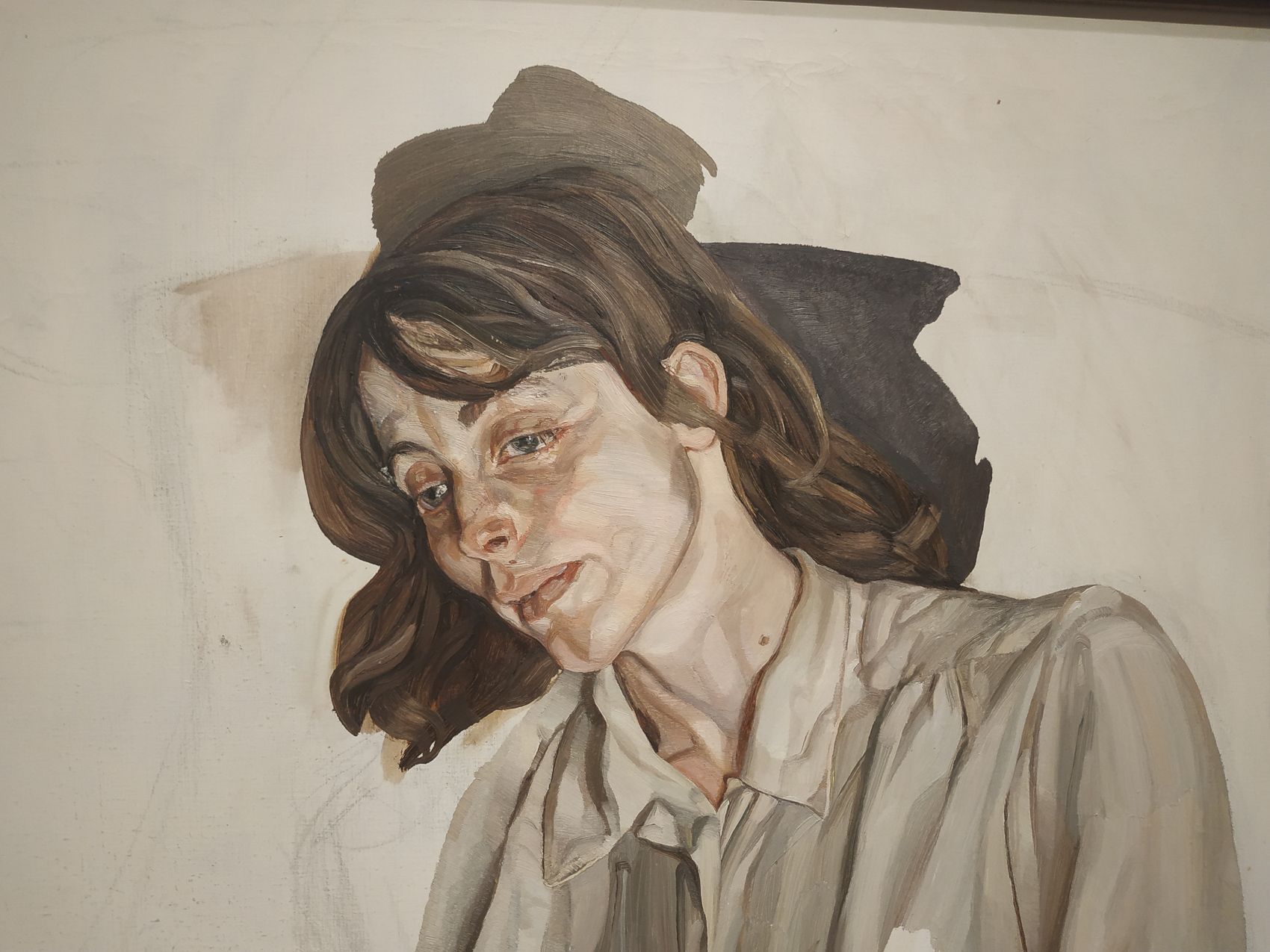
Oil and pencil on canvas
61 x 61 cm
1976-1977
Privacy
Freud always painted from life and preferred to portray his immediate environment, lovers, friends and family, in order to be able to act with greater freedom. This intimacy is reflected especially in his double portraits.
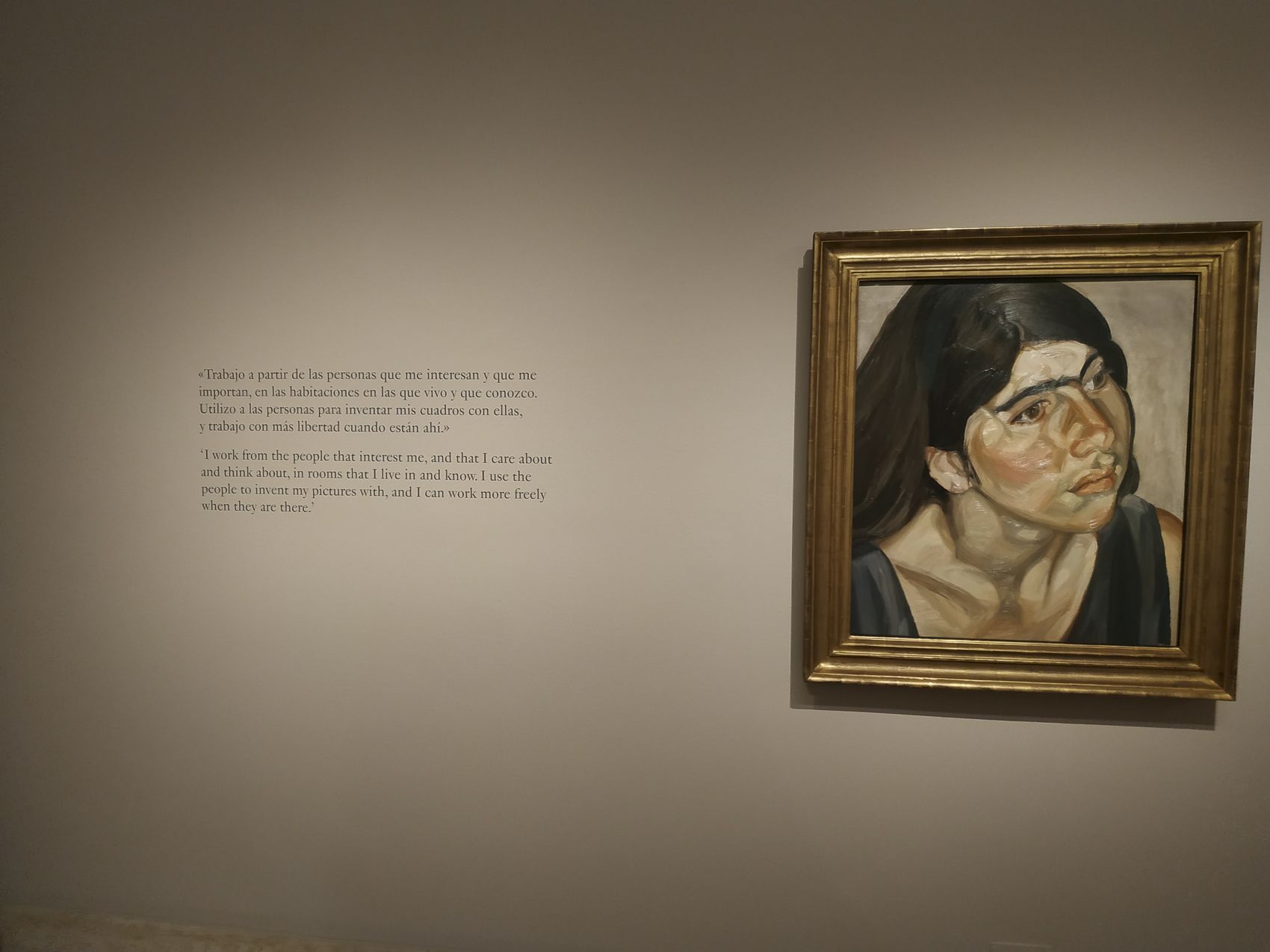
Oil on canvas
81.2 x 71.1 cm
1962
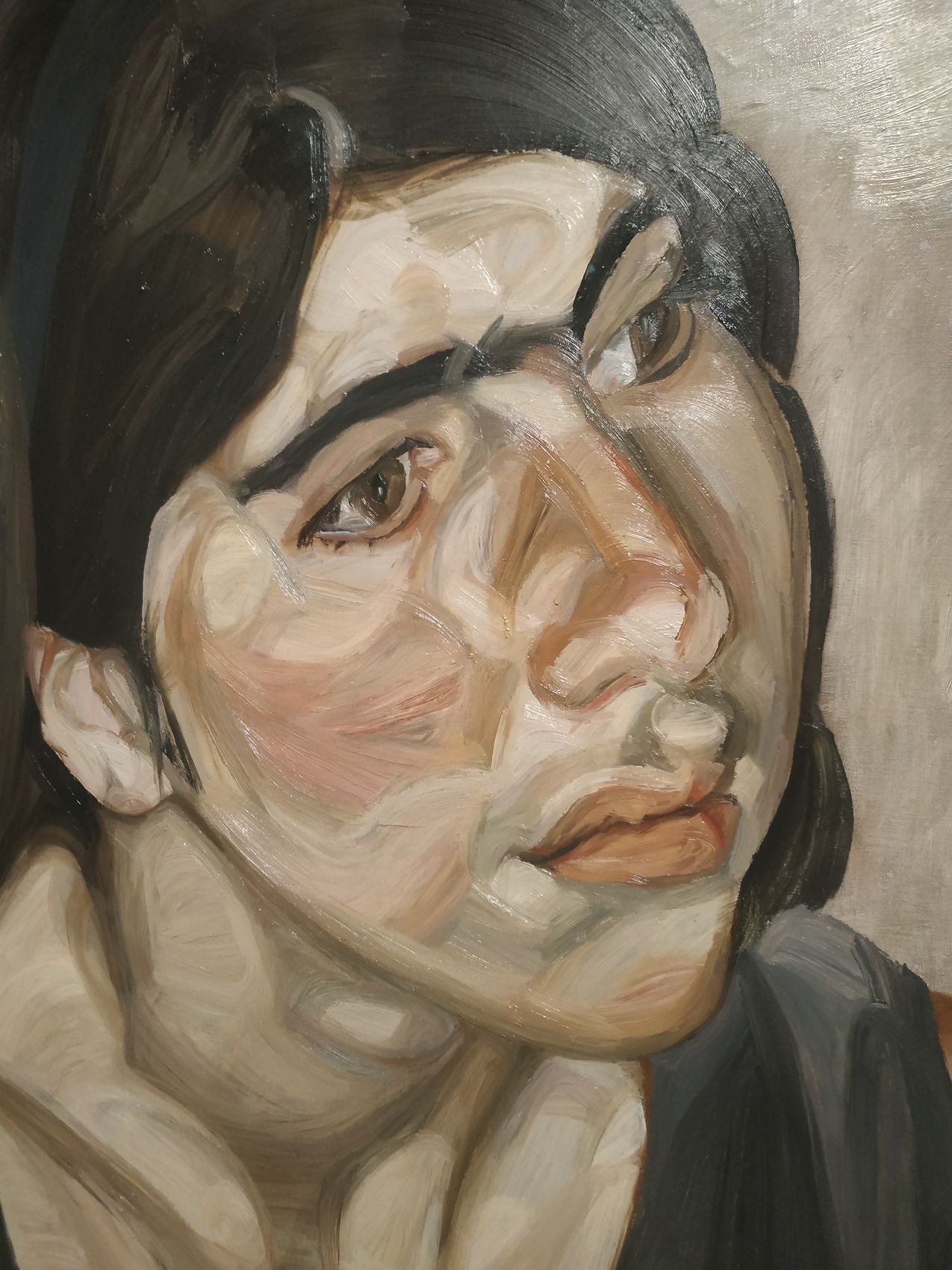
Oil on canvas
81.2 x 71.1 cm
1962
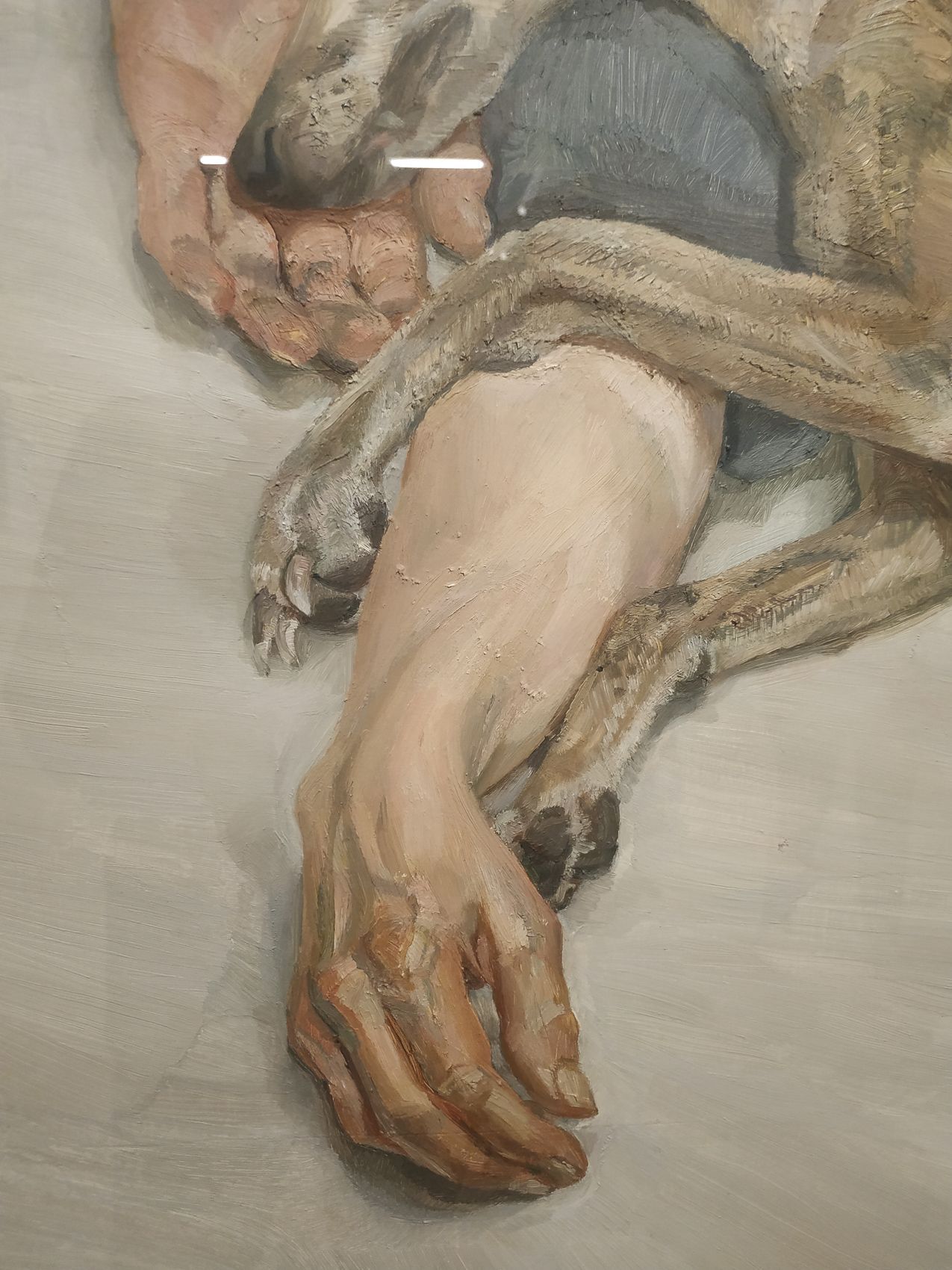
Oil on canvas
78.8 x 88.9 cm
1985-1986
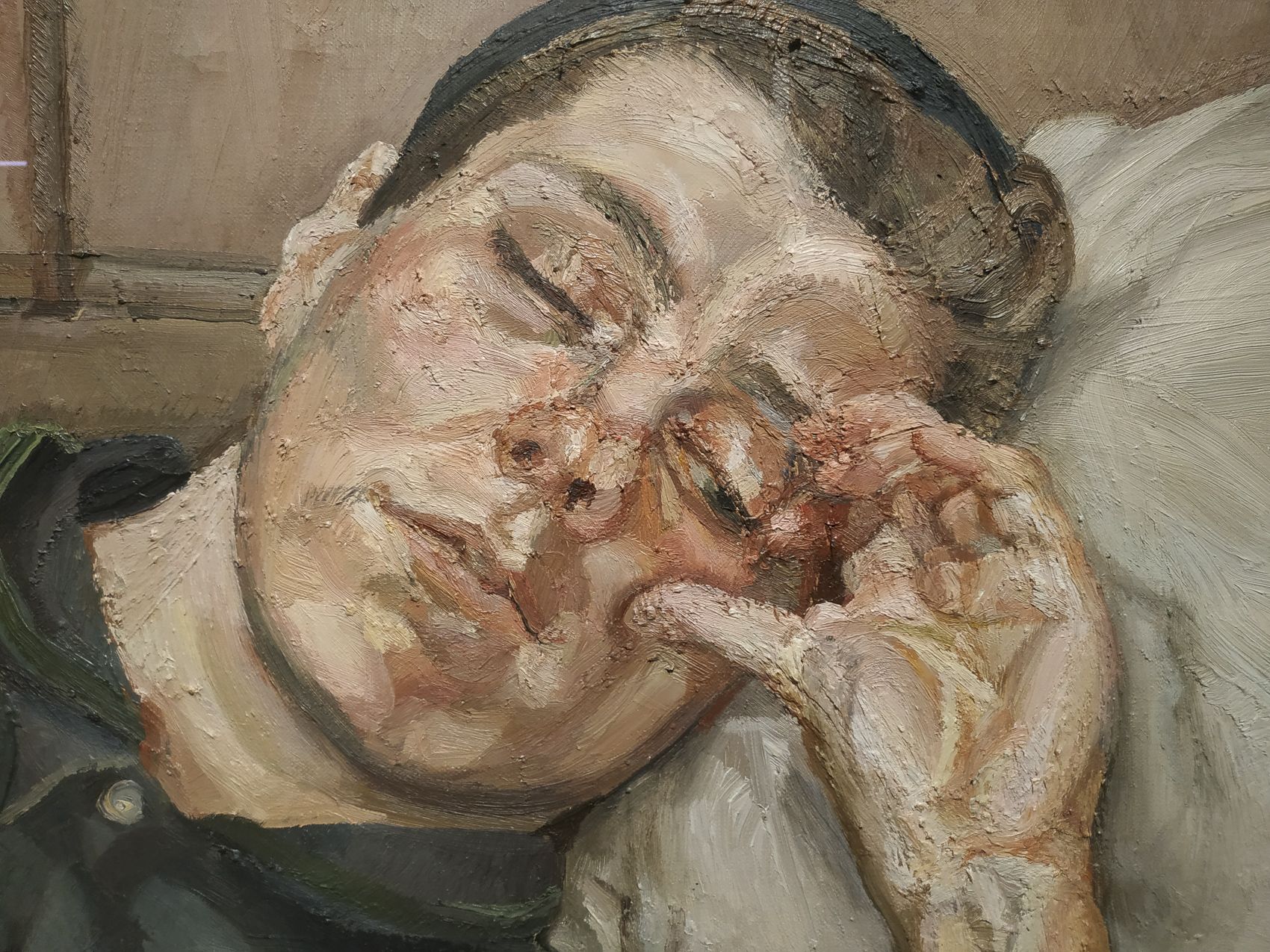
Oil on canvas
50.2 x 60.1 cm
1990
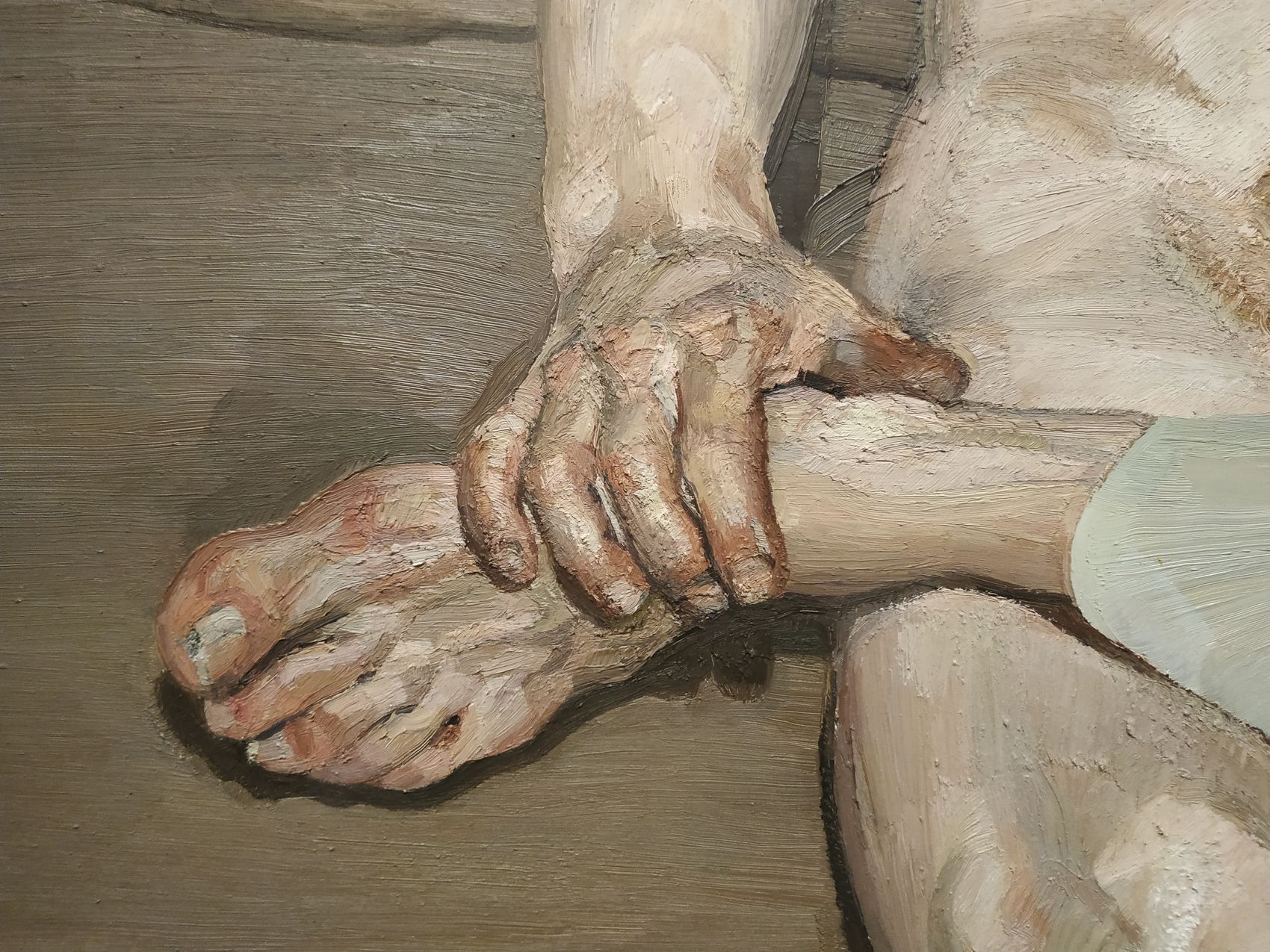
Oil on canvas
90.2 x 105.4 cm
1978-1980
Power of Attorney
As his fame grew, he began to receive portrait commissions, but he rarely accepted them on the condition that they accepted his conditions of posing in his studio and the duration of the sessions. On other occasions he portrays characters as a form of payment of debts contracted, as in the painting “Two Irishmen in W11”.
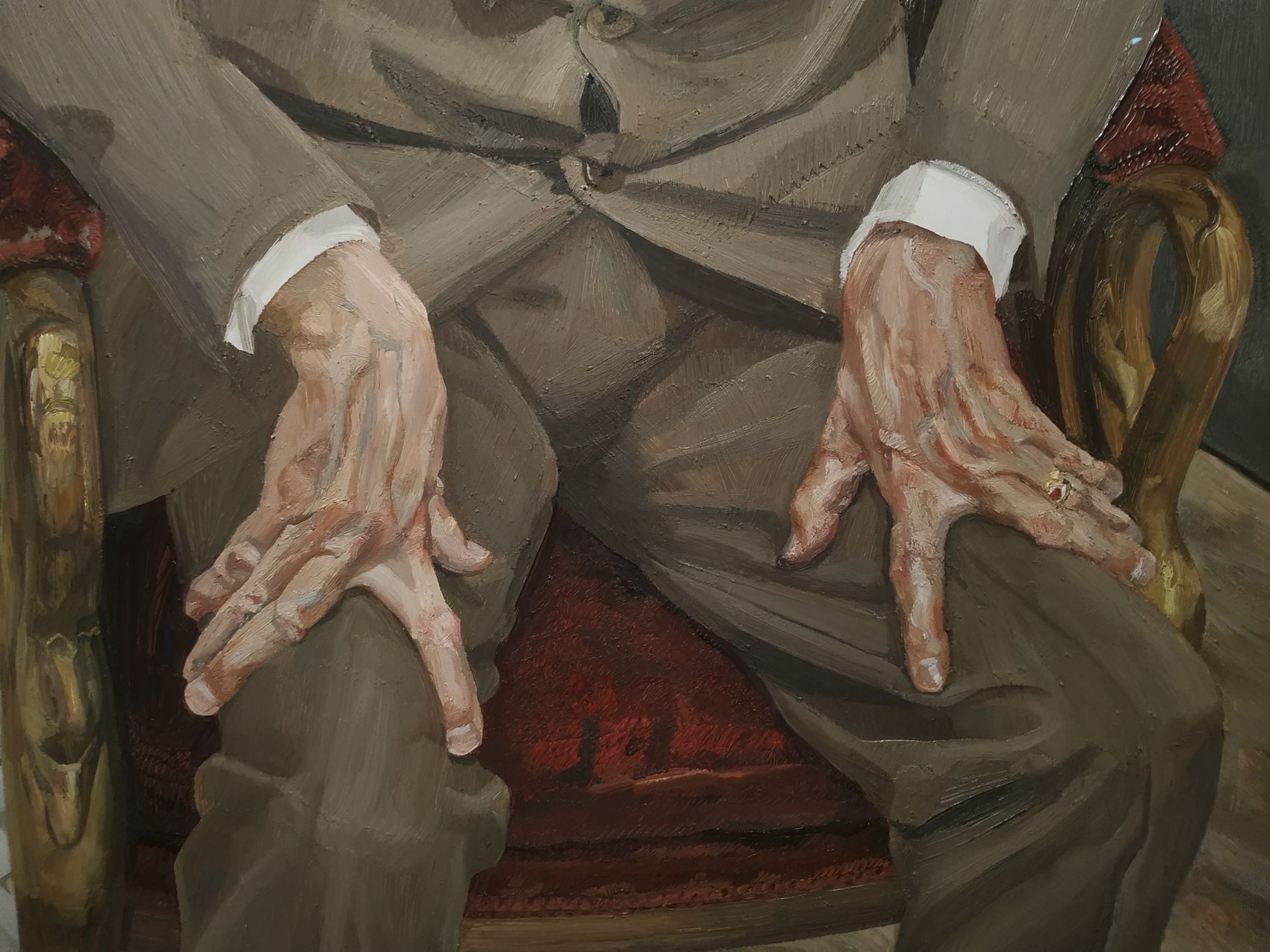
Oil on canvas
120.5 x 100.5 cm
1985
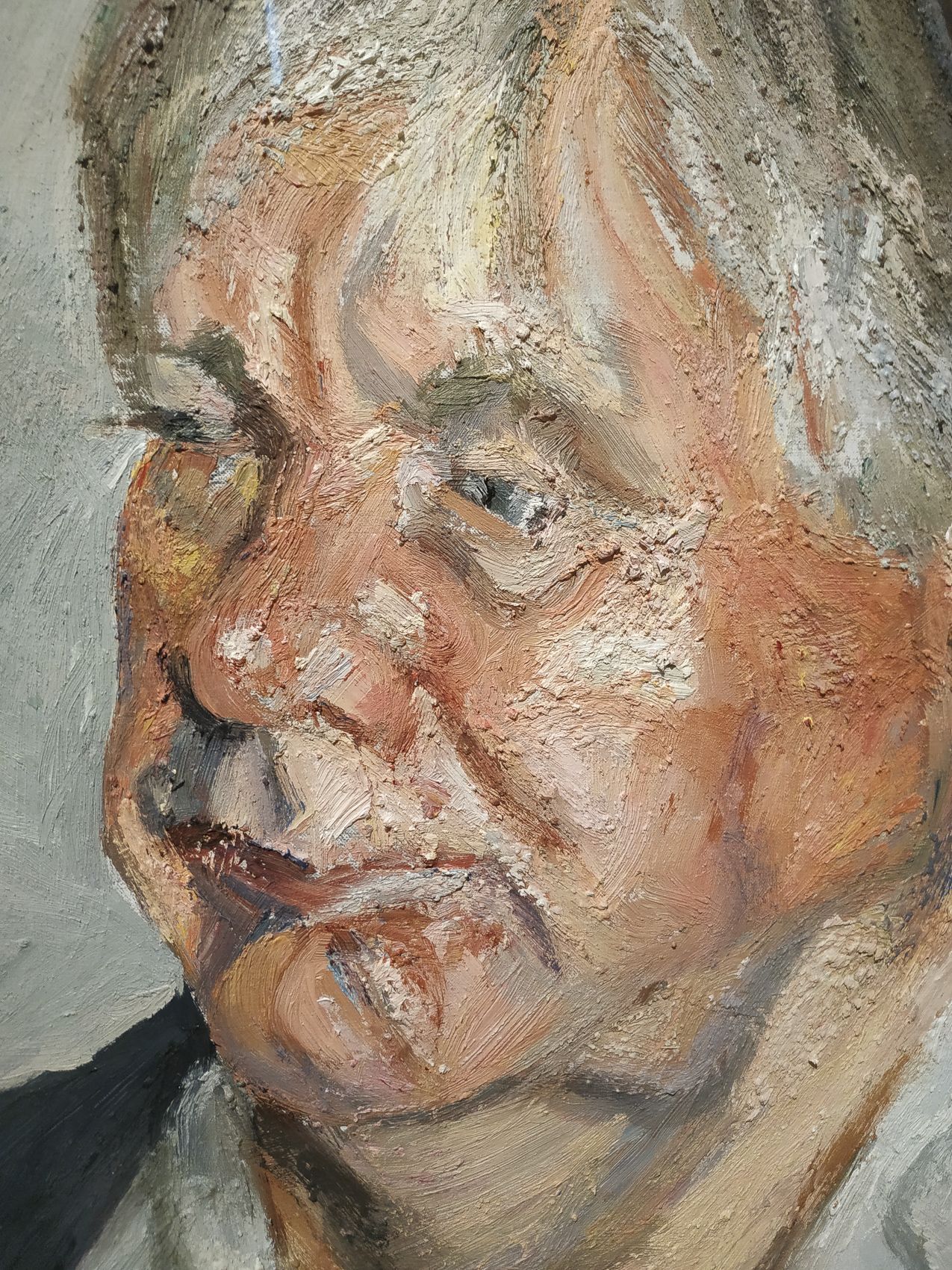
Oil on canvas
52 x40.5 cm
2008
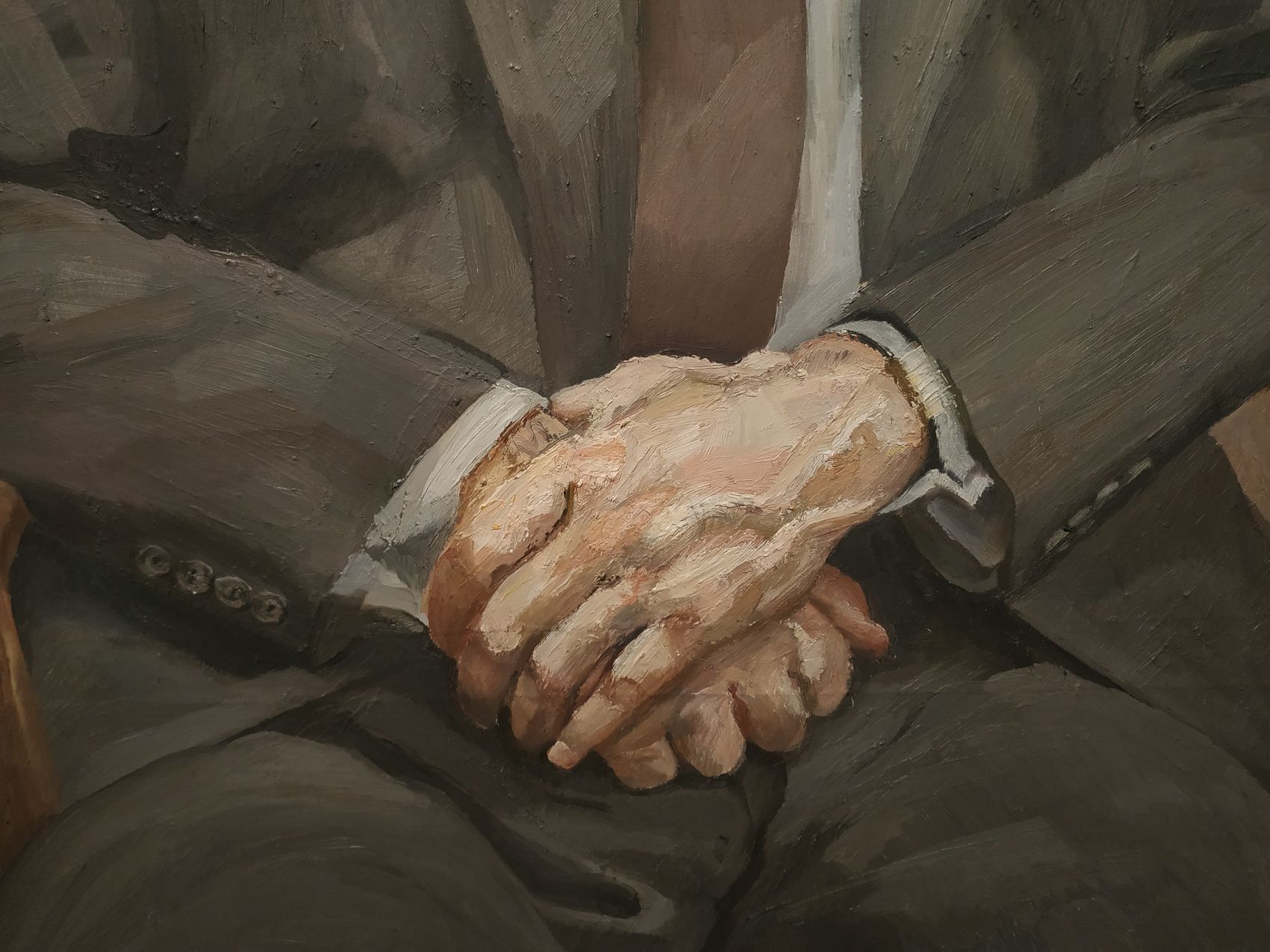
Oil on canvas
114.3 x 79.7 cm
1989
The studio
His workspace becomes the protagonist of his work, his stage.
From the 1980s onwards, his studio became important as a distinctive thematic part, furniture, stacked cloths and fabrics, walls with traces of paint or wooden floors are recognizable elements of this period.
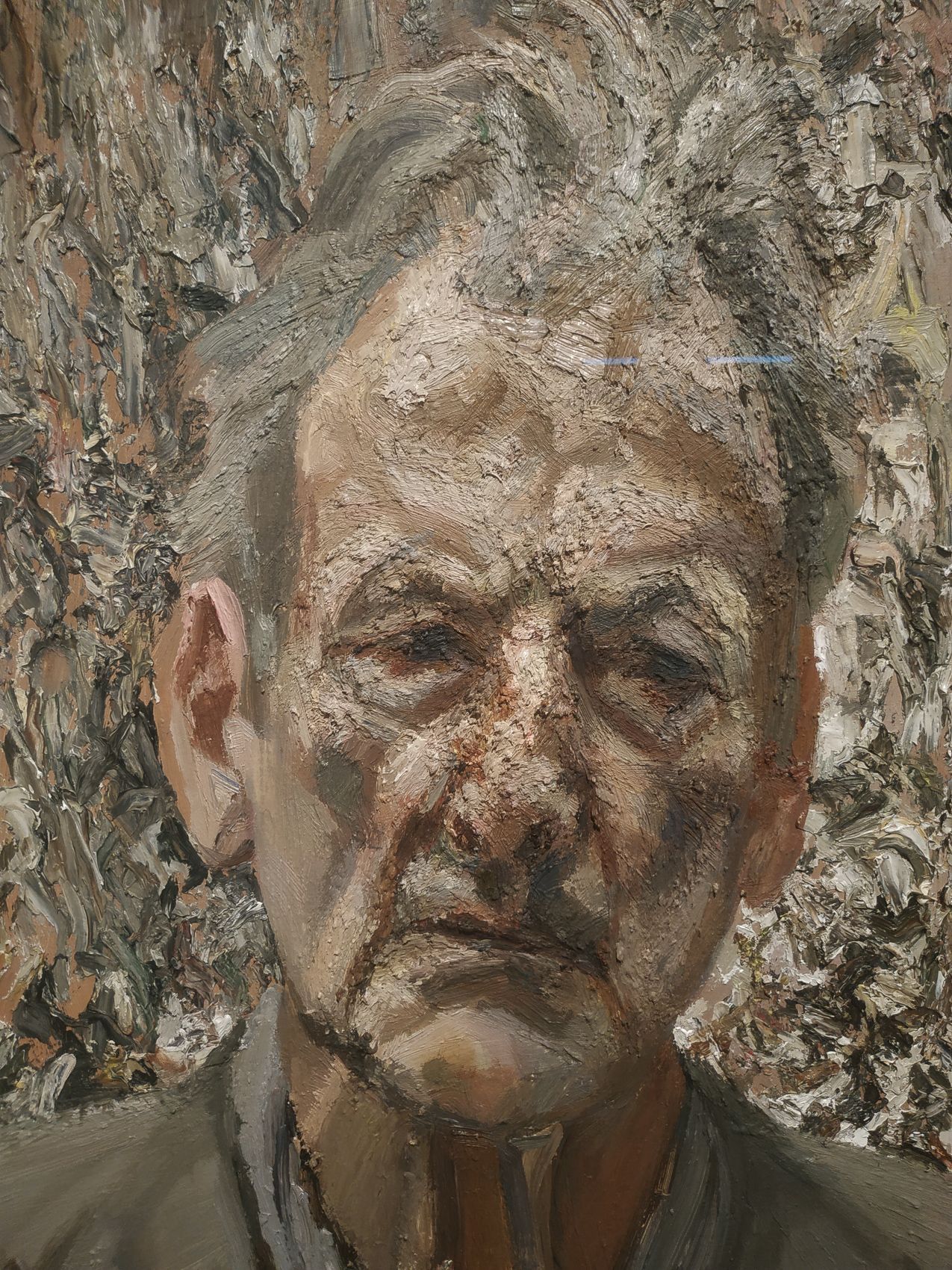
Oil on canvas
66 x 50.8 cm
2002
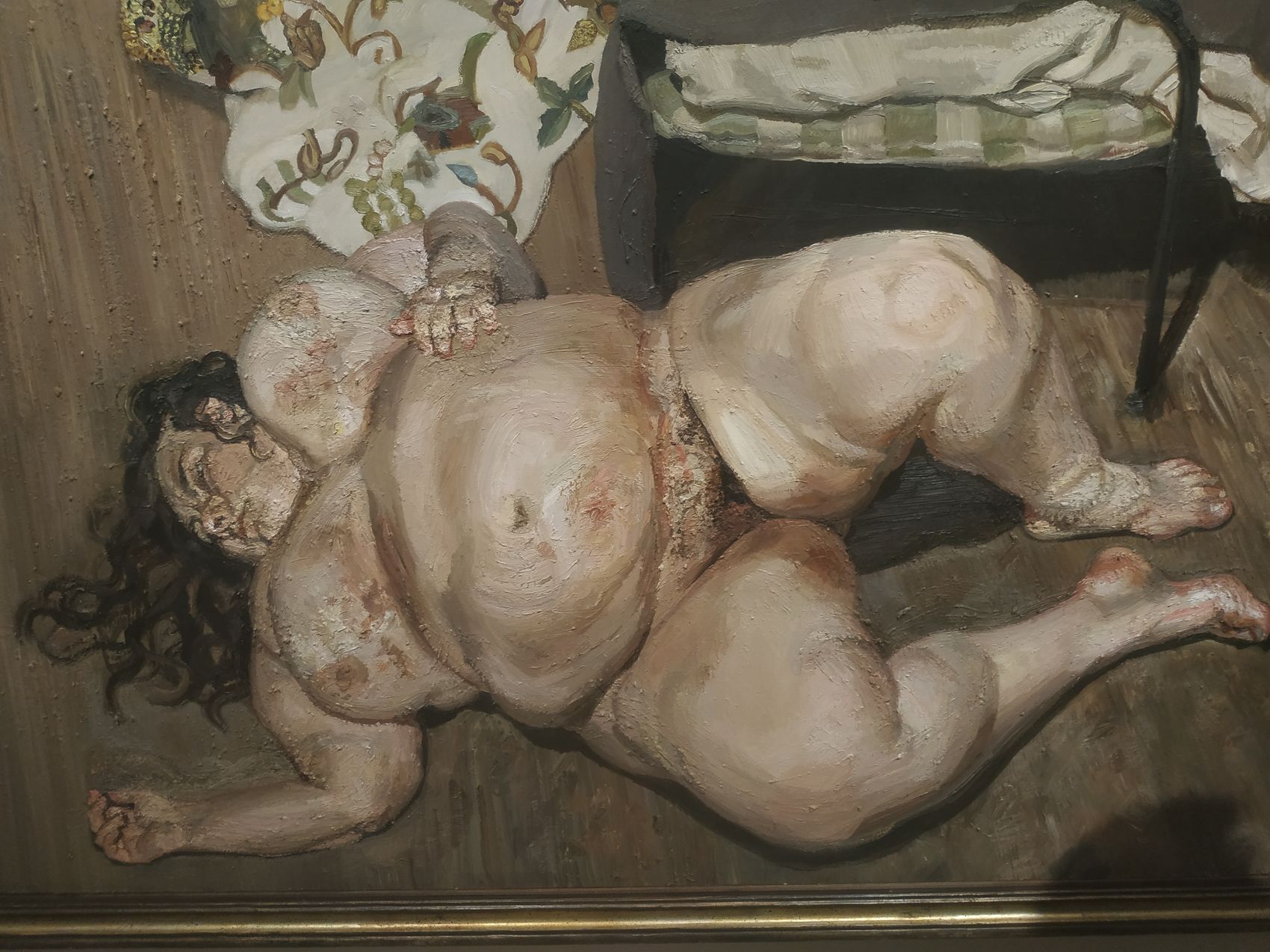
Oil on canvas
200 x 169 cm
1993
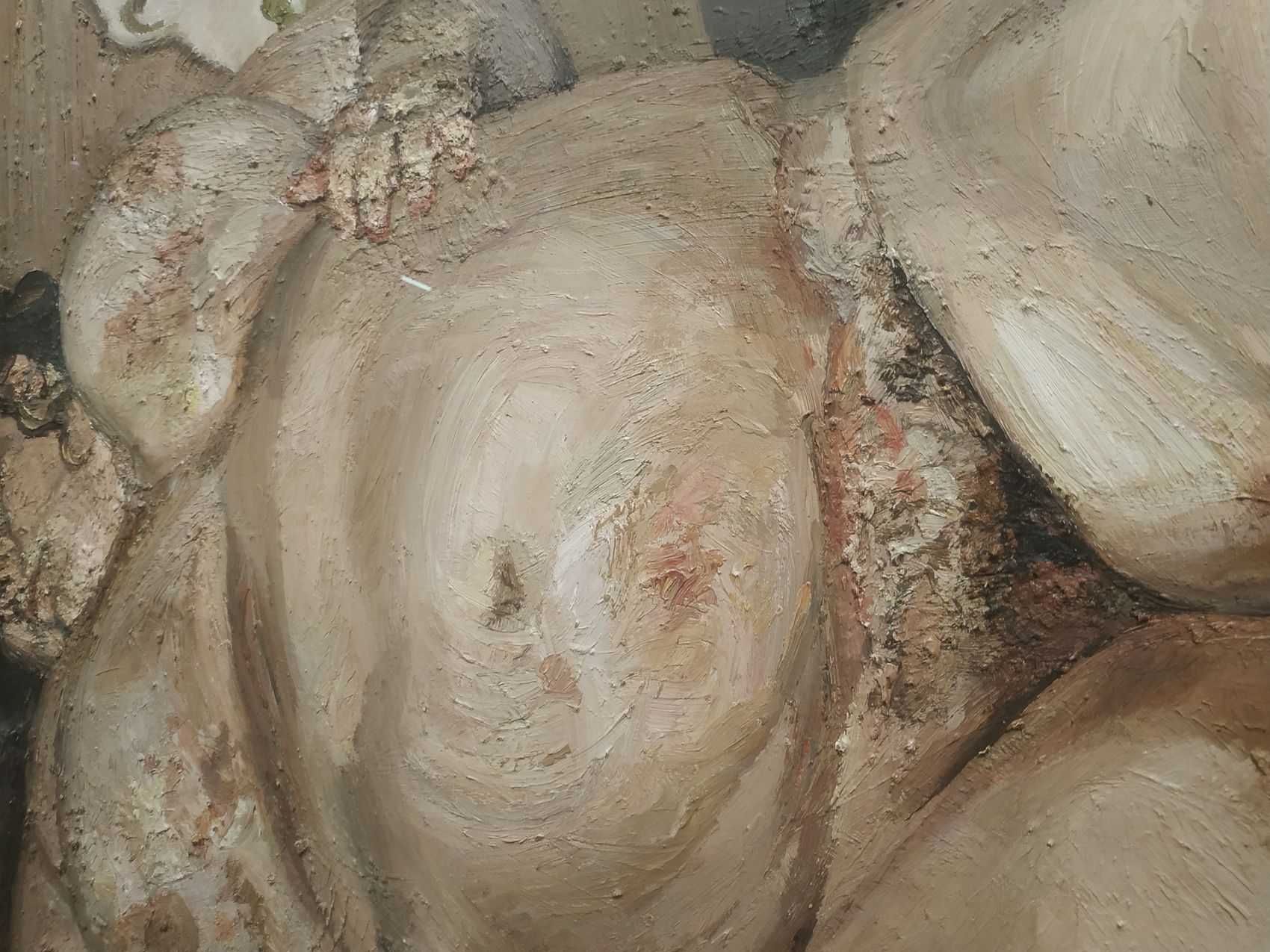
Oil on canvas
200 x 169 cm
1993
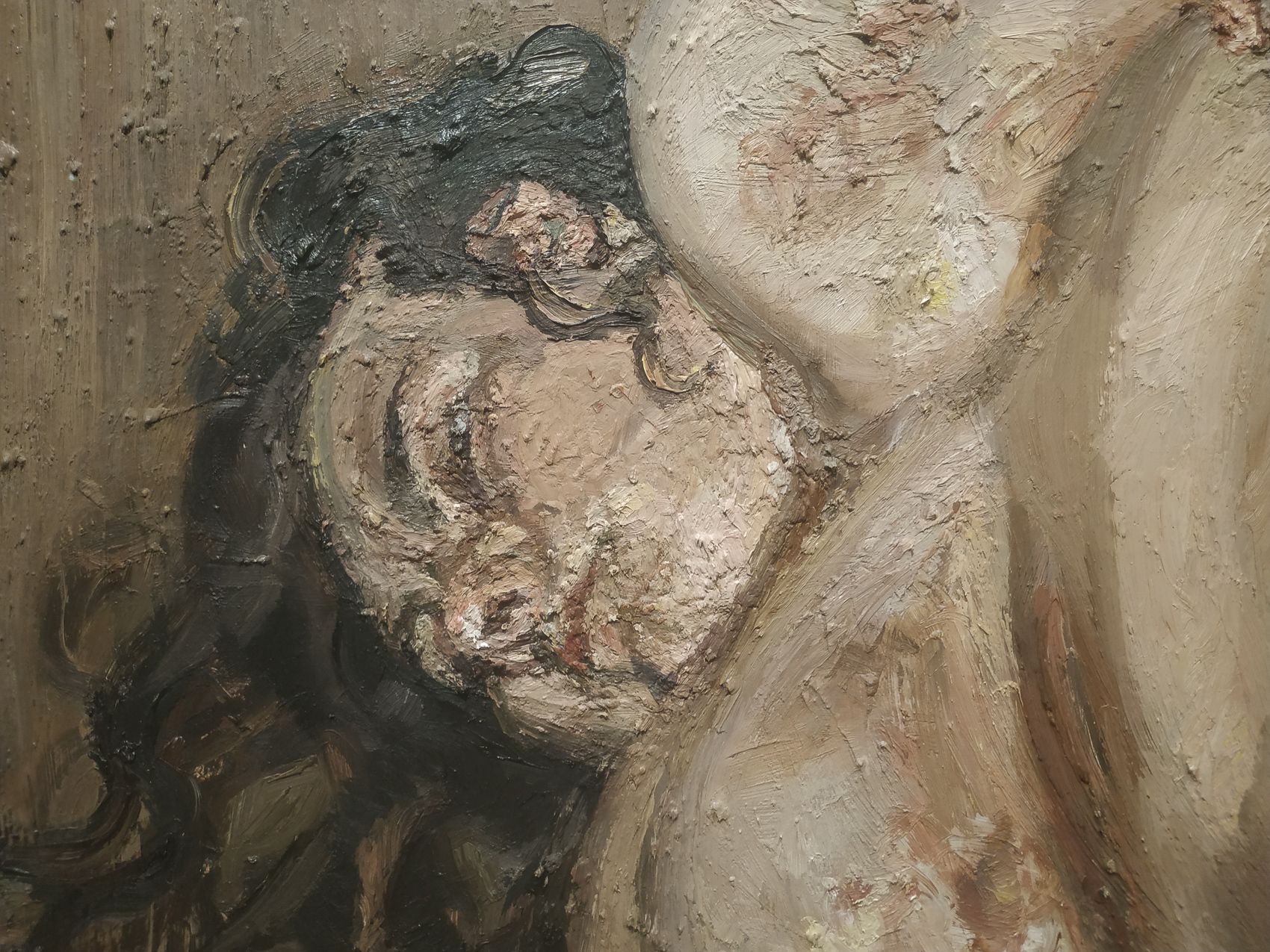
Oil on canvas
200 x 169 cm
1993
Oil on canvas
200 x 169 cm
1993
Oil on canvas
44.5 x 53.3 cm
2002
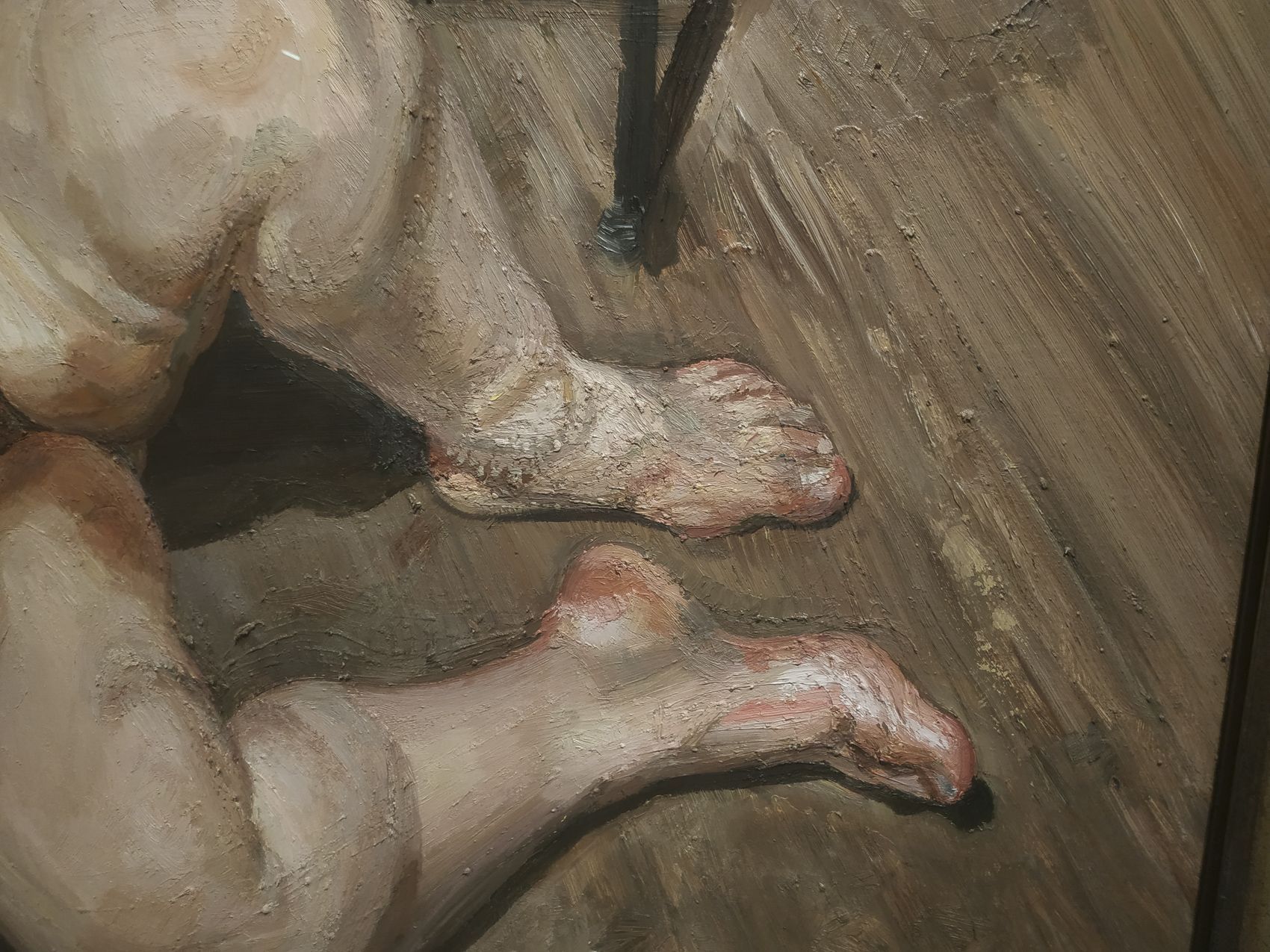
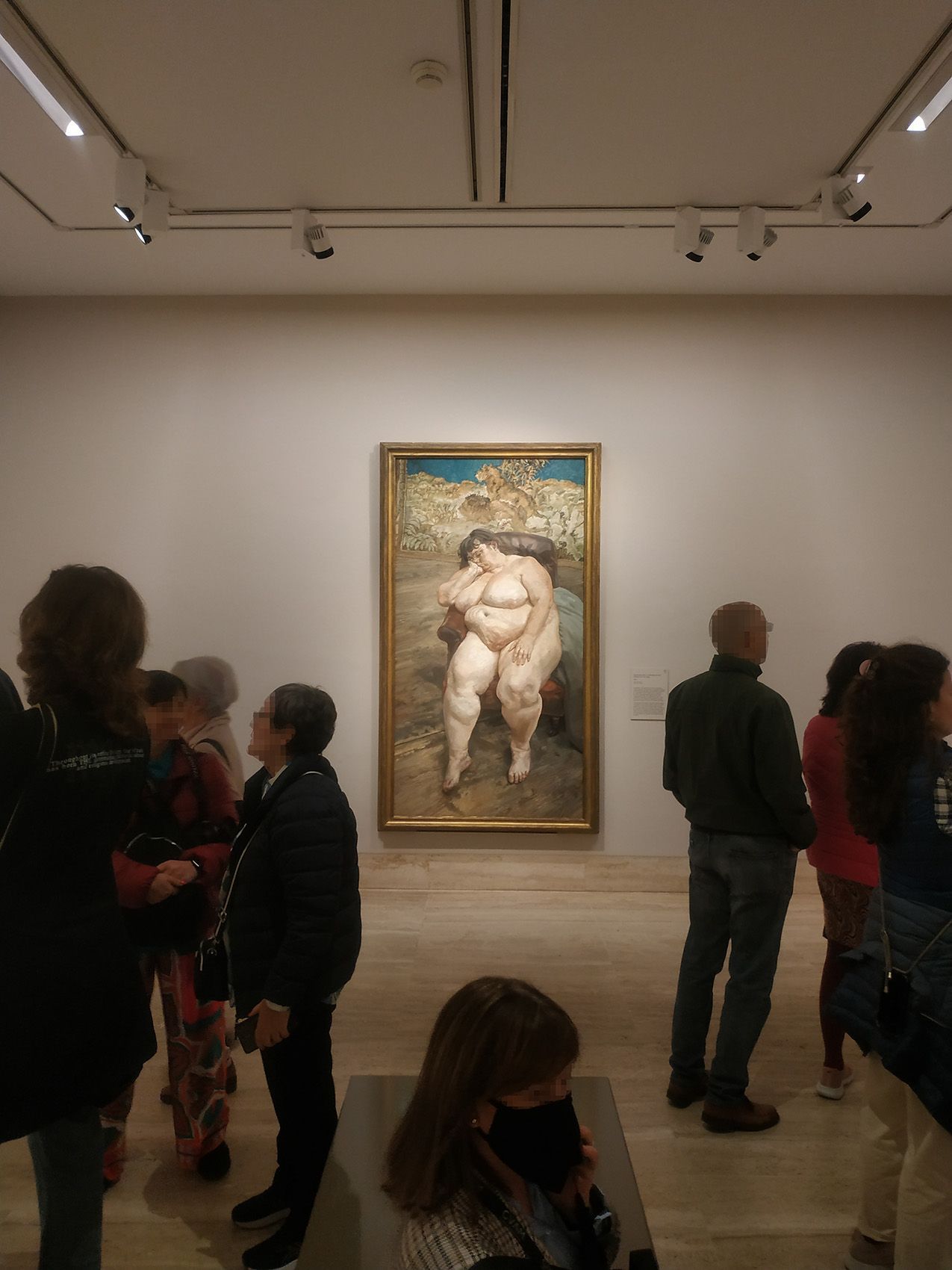
Meat
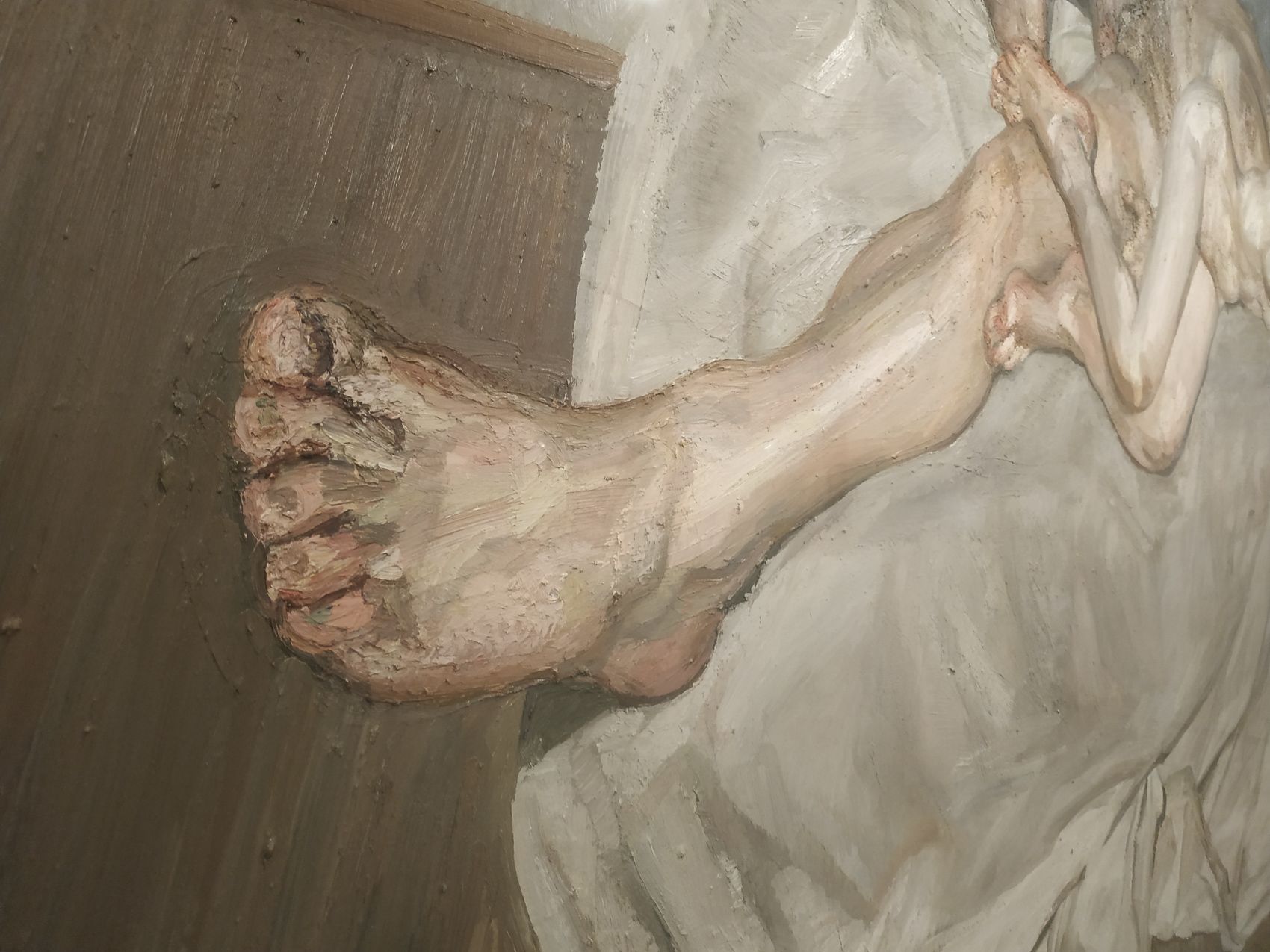
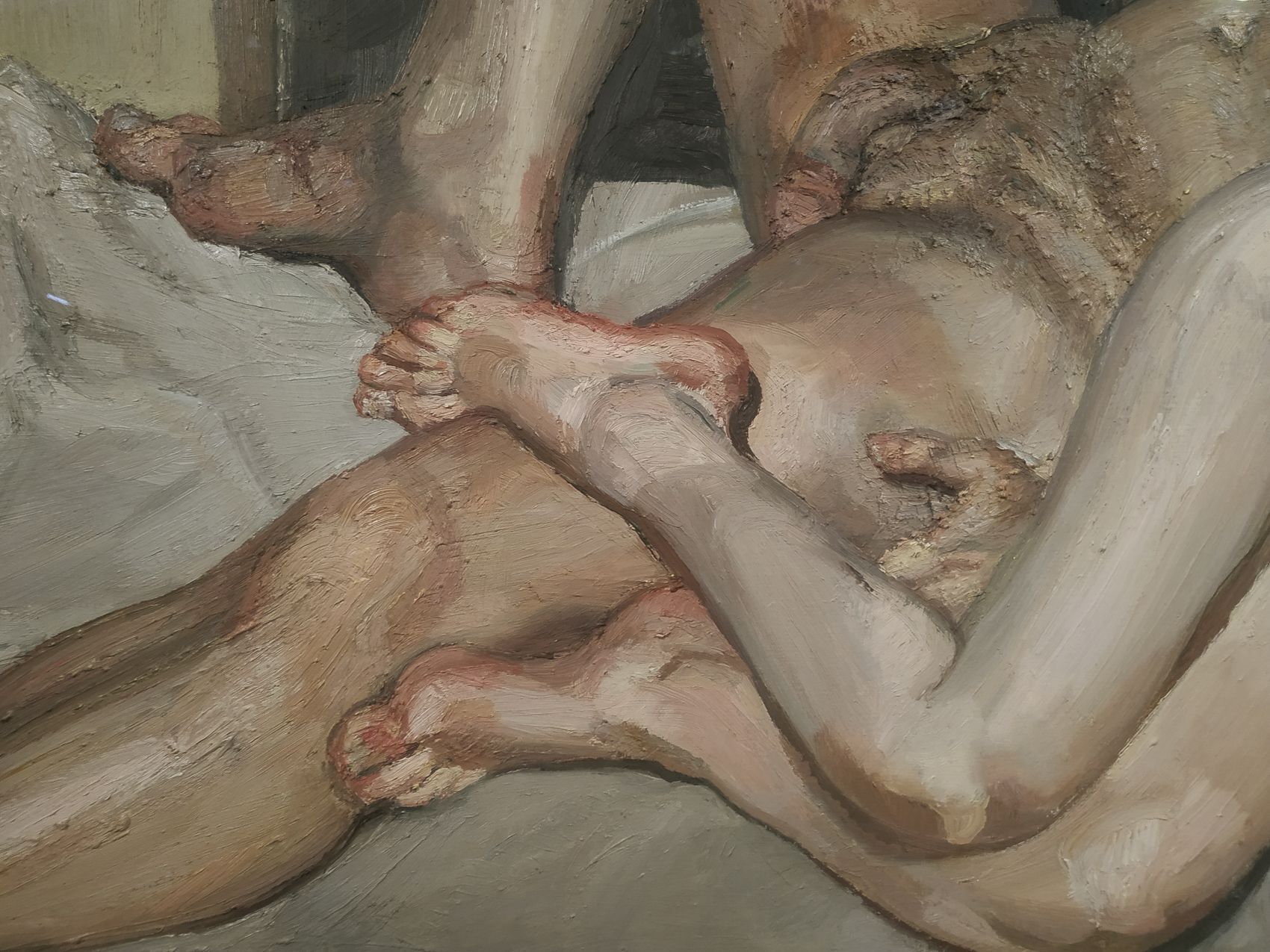
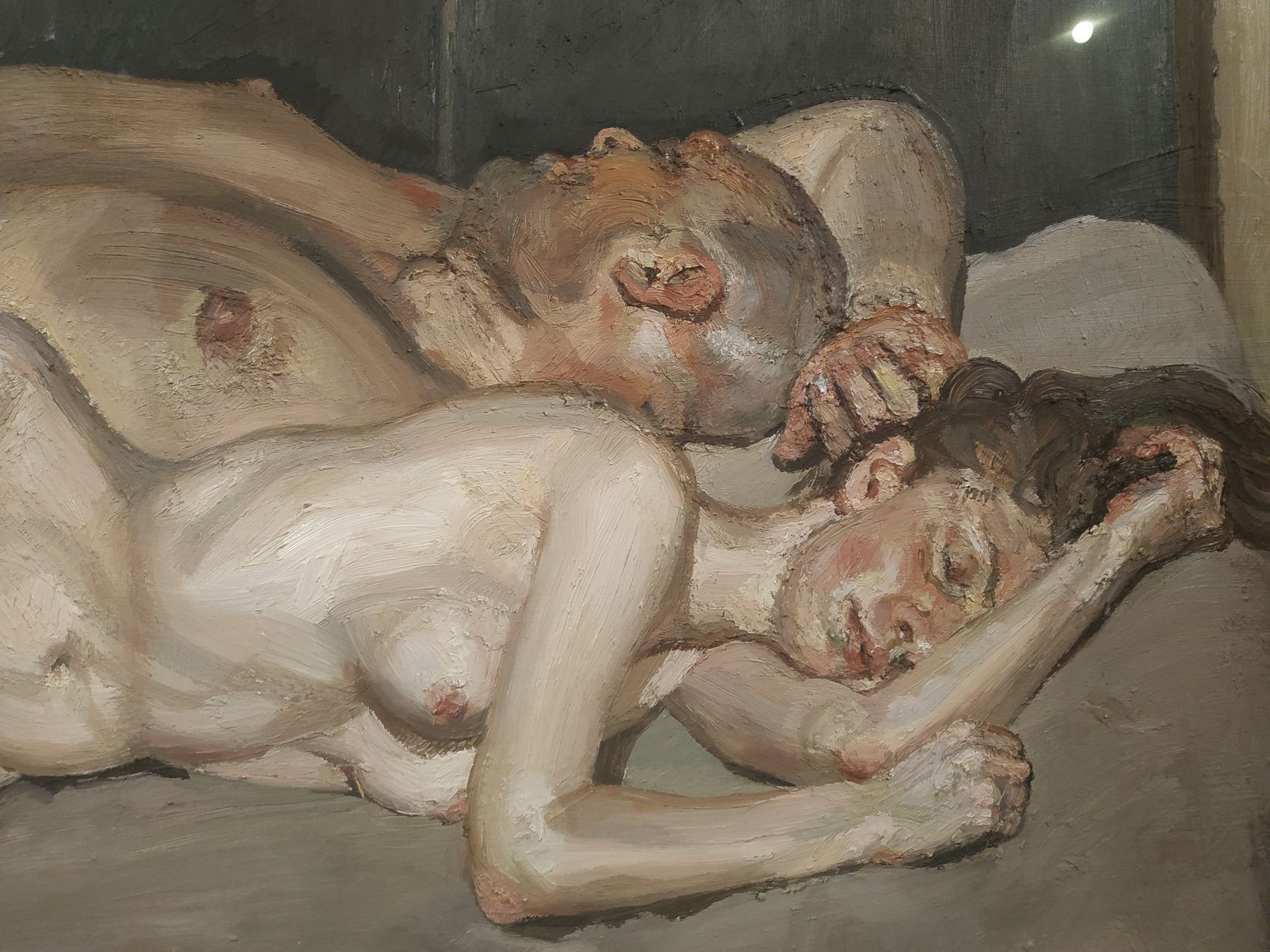
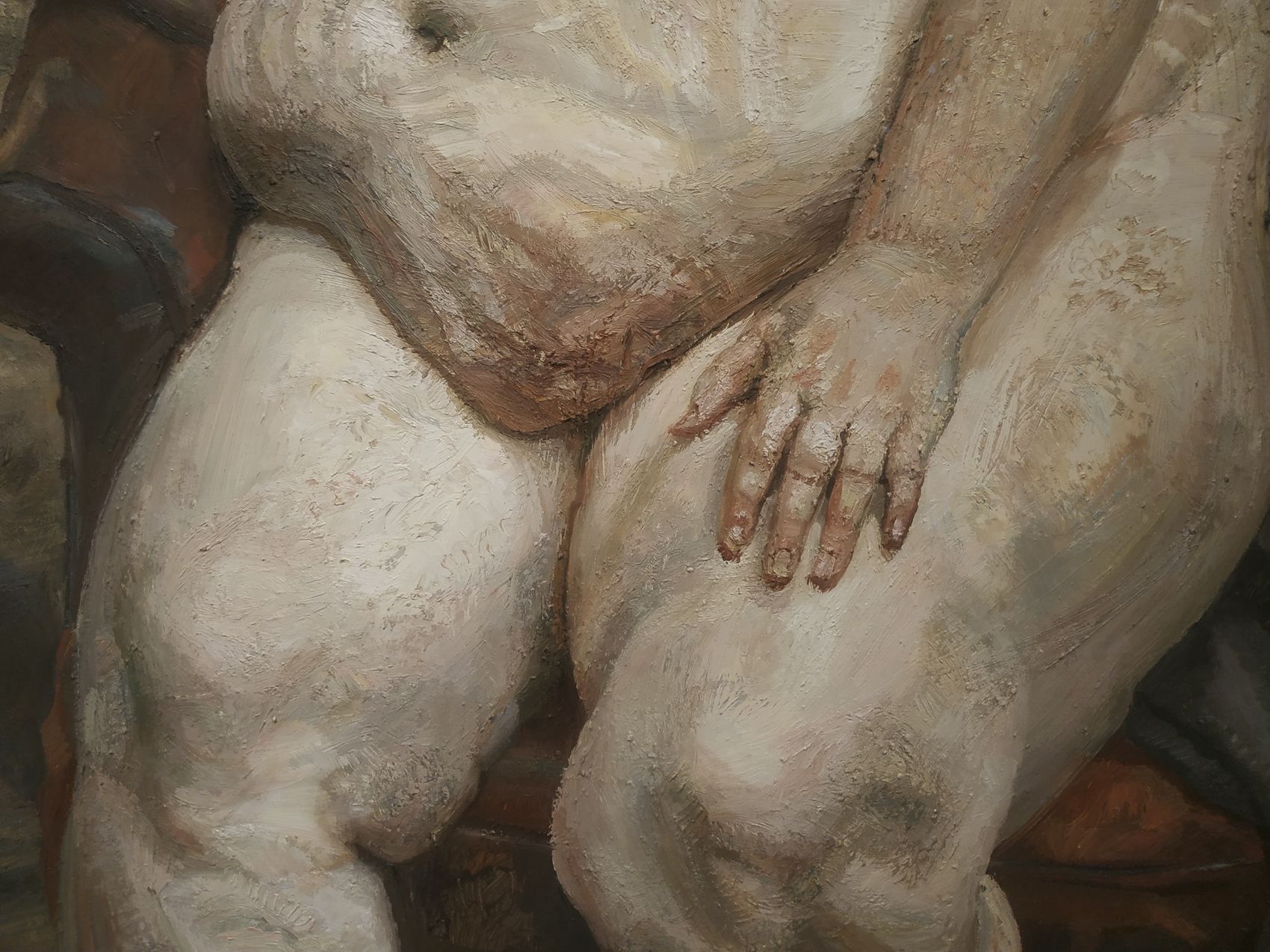
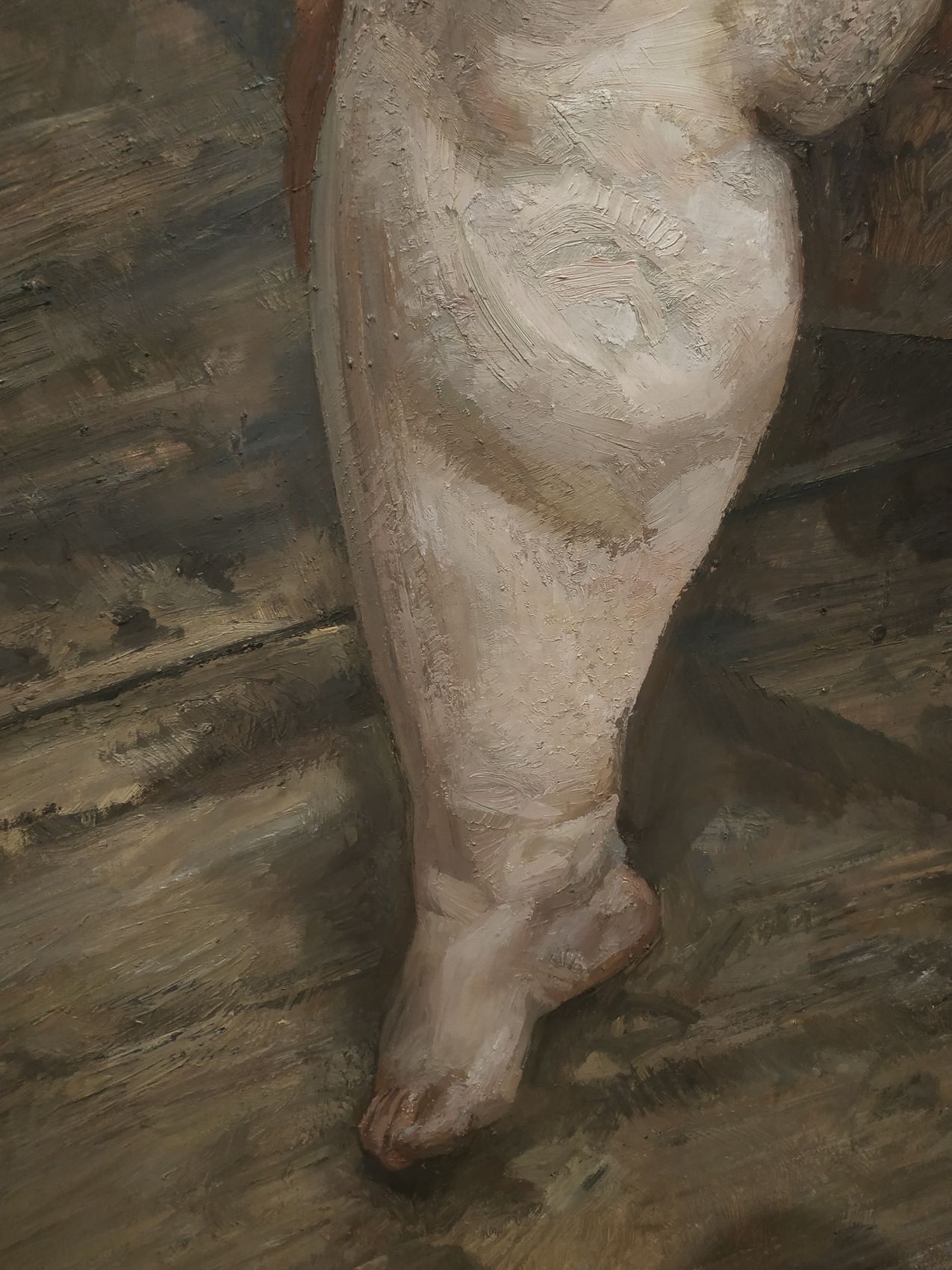
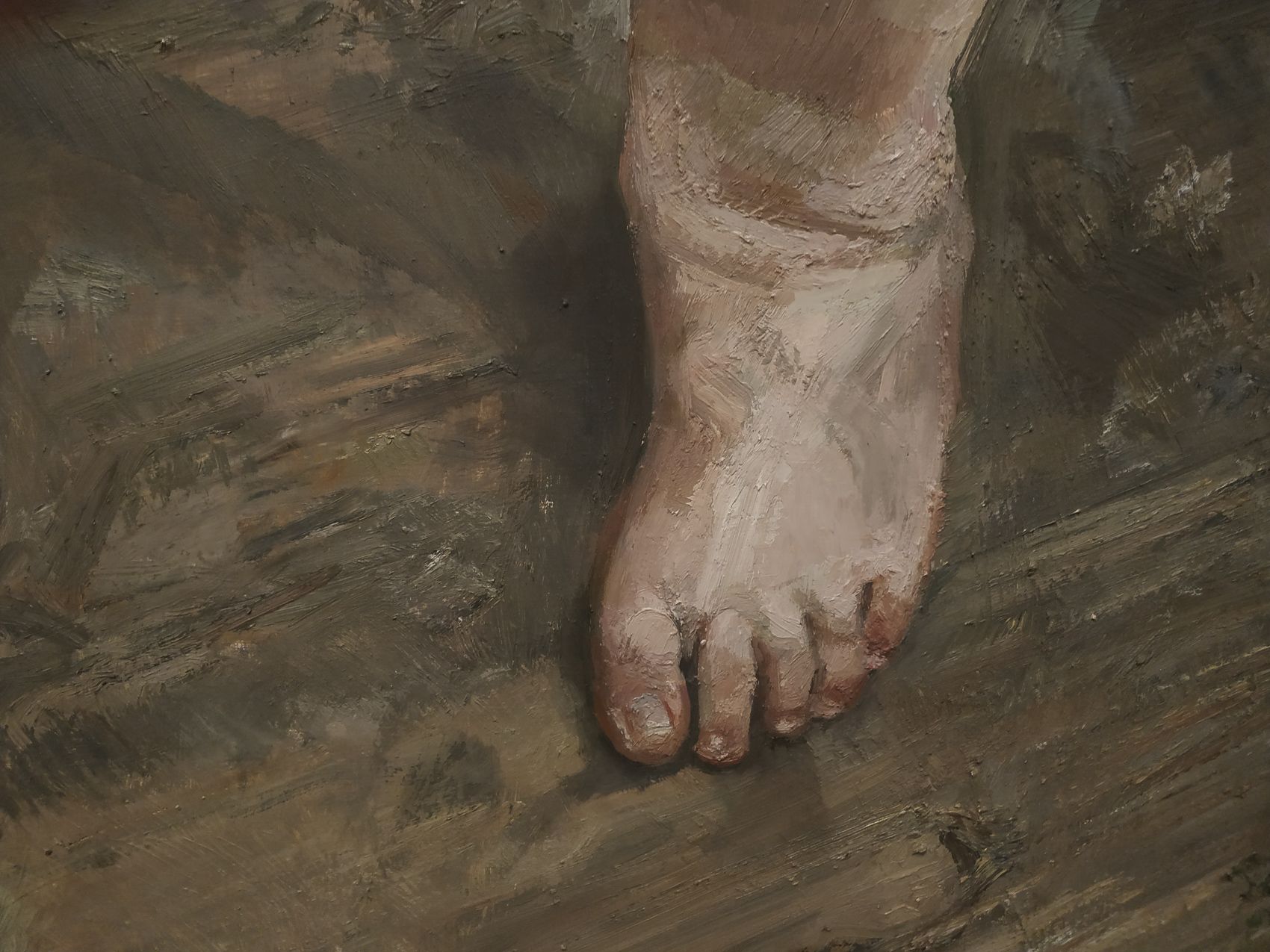
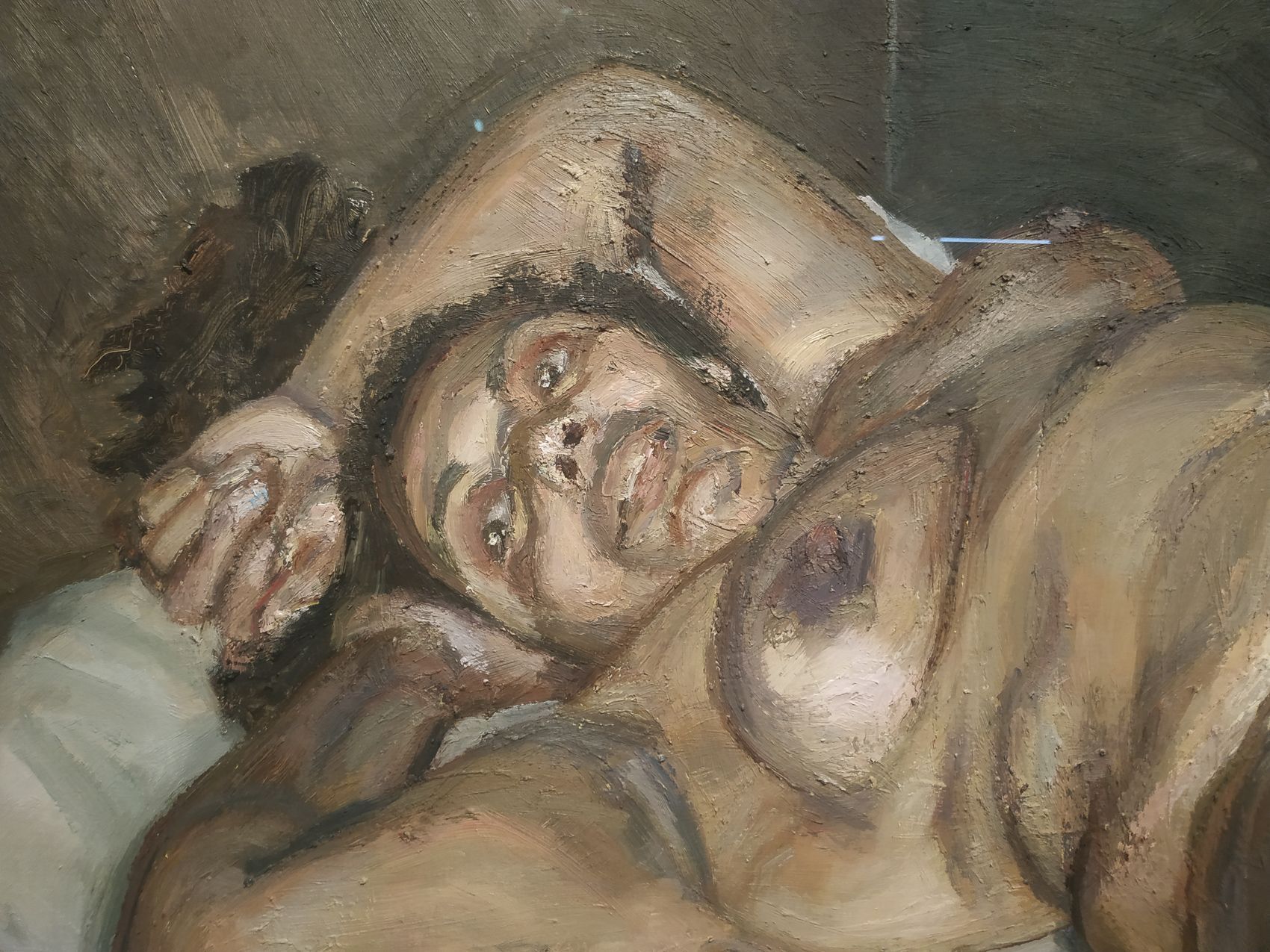
Nude portraits that evidence a profound observation of the human body and the mortality of the flesh.
“I want the paint to act as if it were flesh.”
This phrase was expressed by the artist in 1982, a motto in keeping with the material carnality of his faces and bodies and with his ability to paint the texture of the flesh.
It is, above all, in these last periods that he uses thick fillings of paint, with Cremnitz white as the mainstay of his palette.
Oil on canvas
231.8 x 196.2 cm
1993
Oil on canvas
231.8 x 196.2 cm
1993
Oil on canvas
231.8 x 196.2 cm
1993
Oil on canvas
231.8 x 196.2 cm
1993
Oil on canvas
228 x 121 cm
1996
Oil on canvas
228 x 121 cm
1996
Oil on canvas
228 x 121 cm
1996
Oil on canvas
228 x 121 cm
1996
Oil on canvas
96.8 x 103.8 cm
2003
Videos and links
Official video of the Museo Nacional Thyssen about the exhibition Lucian Freud: New Perspectives
Interviews in Freud’s studio.
Video that reviews his work and includes some fragments of interviews.
More information on the website of the Museo Nacional Thyssen and on the website of the National Gallery.